
How to Spend a Week in Puglia, Italy
July 2026
Please Note: This post contains affiliate links, meaning if you book through them I may earn a small commission, at no extra cost to you.
Puglia, or Apulia, has a completely different energy to other areas of Italy I'd visited and is an area Italians themselves vacation in. This area, known as the sunny heel of Italy’s boot, boasts: whitewashed towns clinging to cliffs, working harbors full of blue fishing boats, a village of fairytale like trulli houses, and, just over the regional border, an entire city carved into rock.
While other areas of Italy such as the Amalfi Coast and Cinque Terre are extremely popular for a reason and deservedly so; if you are seeking a quieter, more quintessential Italian destination or simply want to explore a new area of Italy, then I highly recommend you consider the Puglia region for your next trip.
A week in Puglia allows enough time to explore different towns, each with their unique characteristics, while also allowing some time for relaxing by the sea or pool. I spent a week in the region and visited 4 towns: Polignano a Mare, Monopoli, Alberobello and Matera (in nearby Basilicata). There are of course other towns in the region you could also explore, but in this post I will cover the 4 I visited.
Polignano a Mare
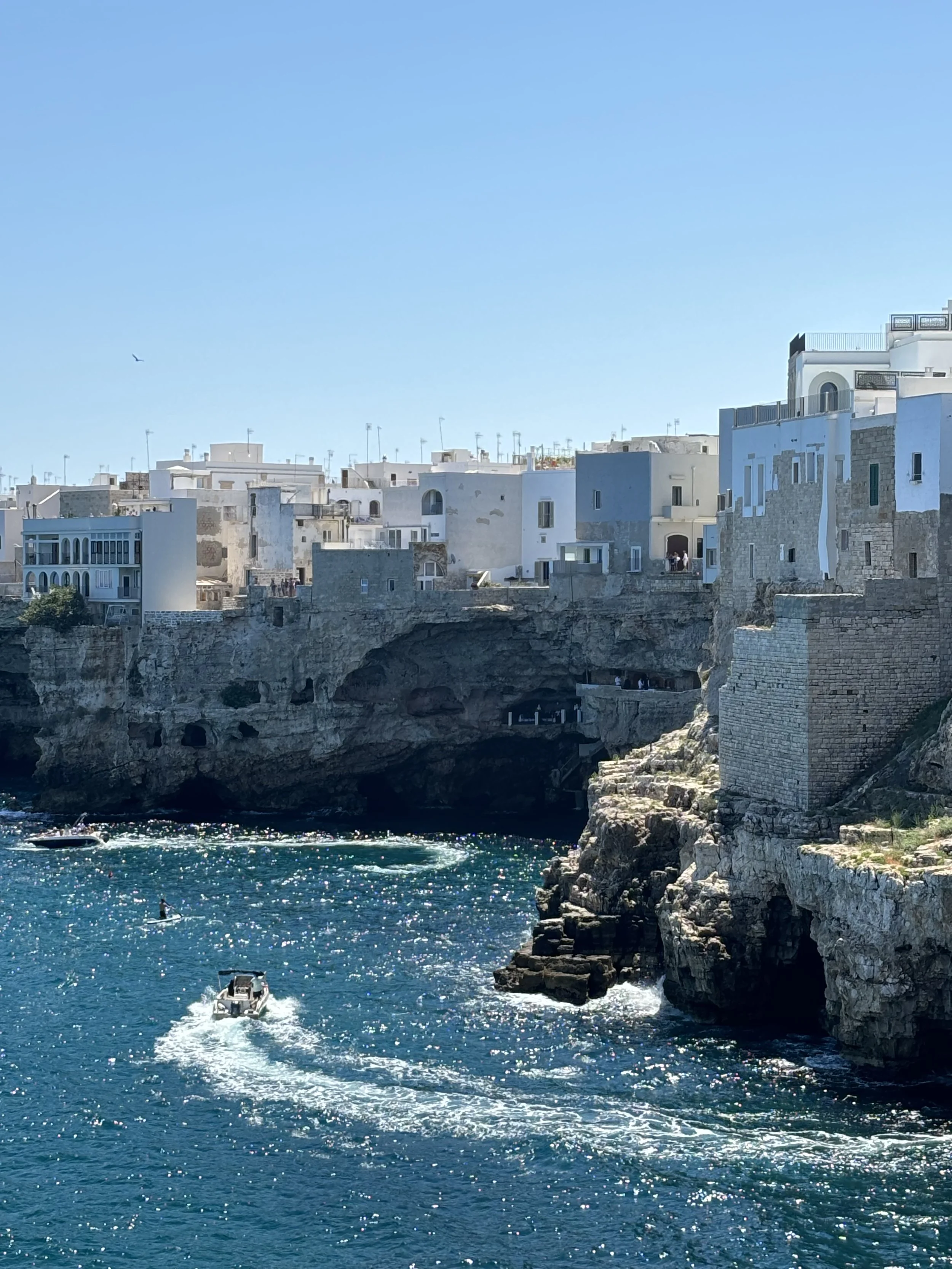
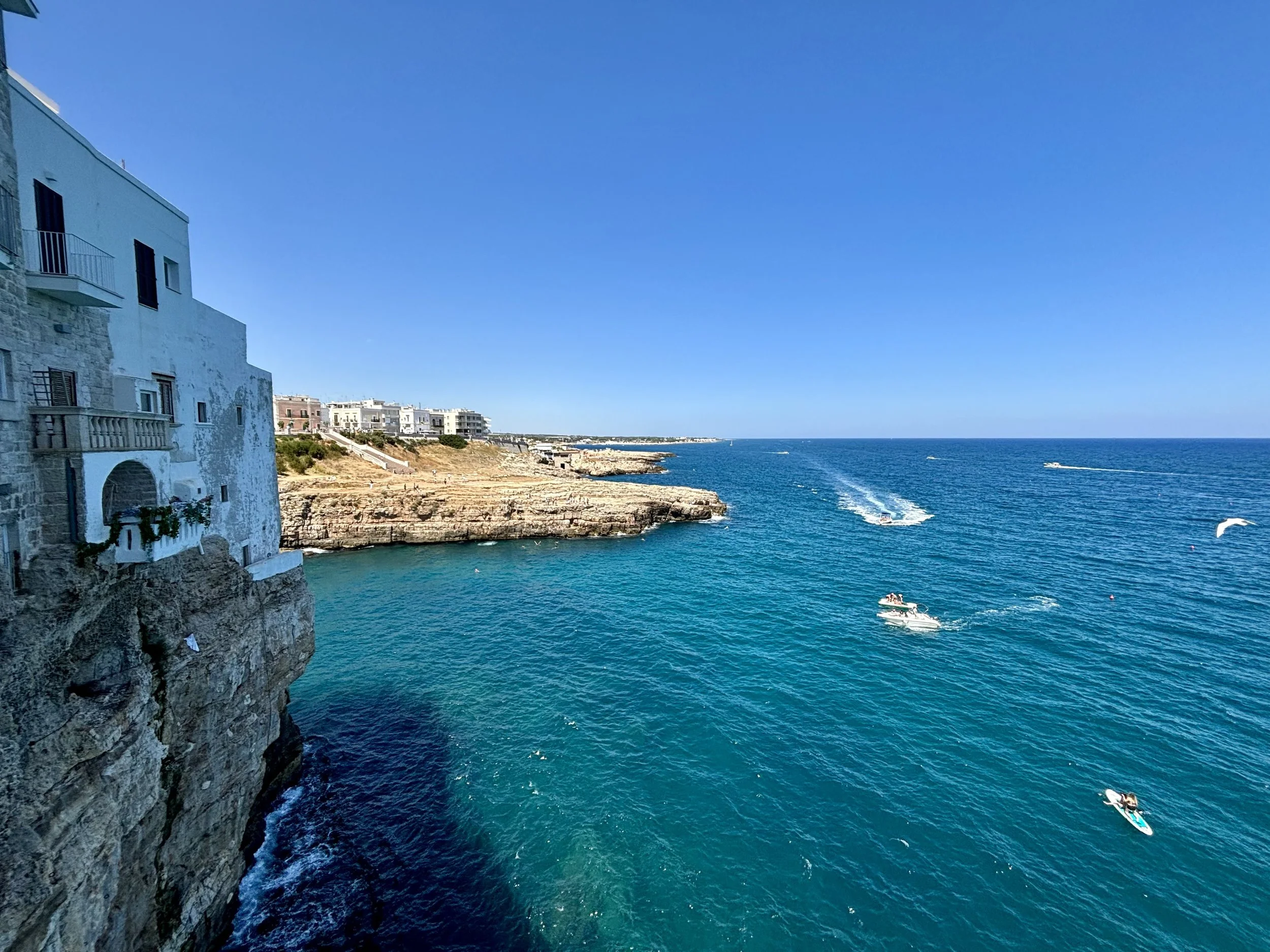
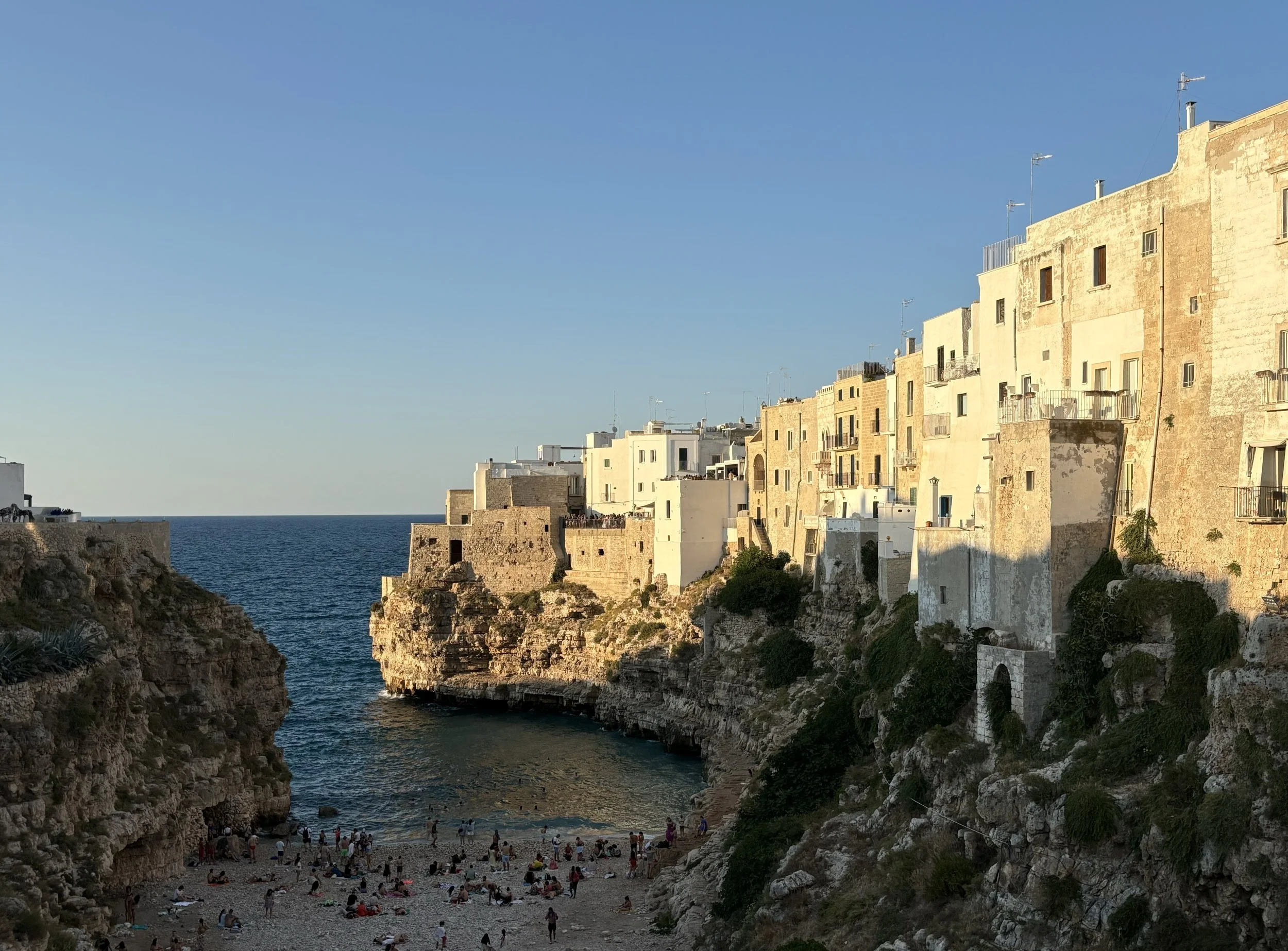
Polignano a Mare, with its whitewashed buildings clinging to the limestone cliff edges, against the azure blue waters of the Adriatic Sea, might be the most photographed town in Puglia, and honestly, it earns it.
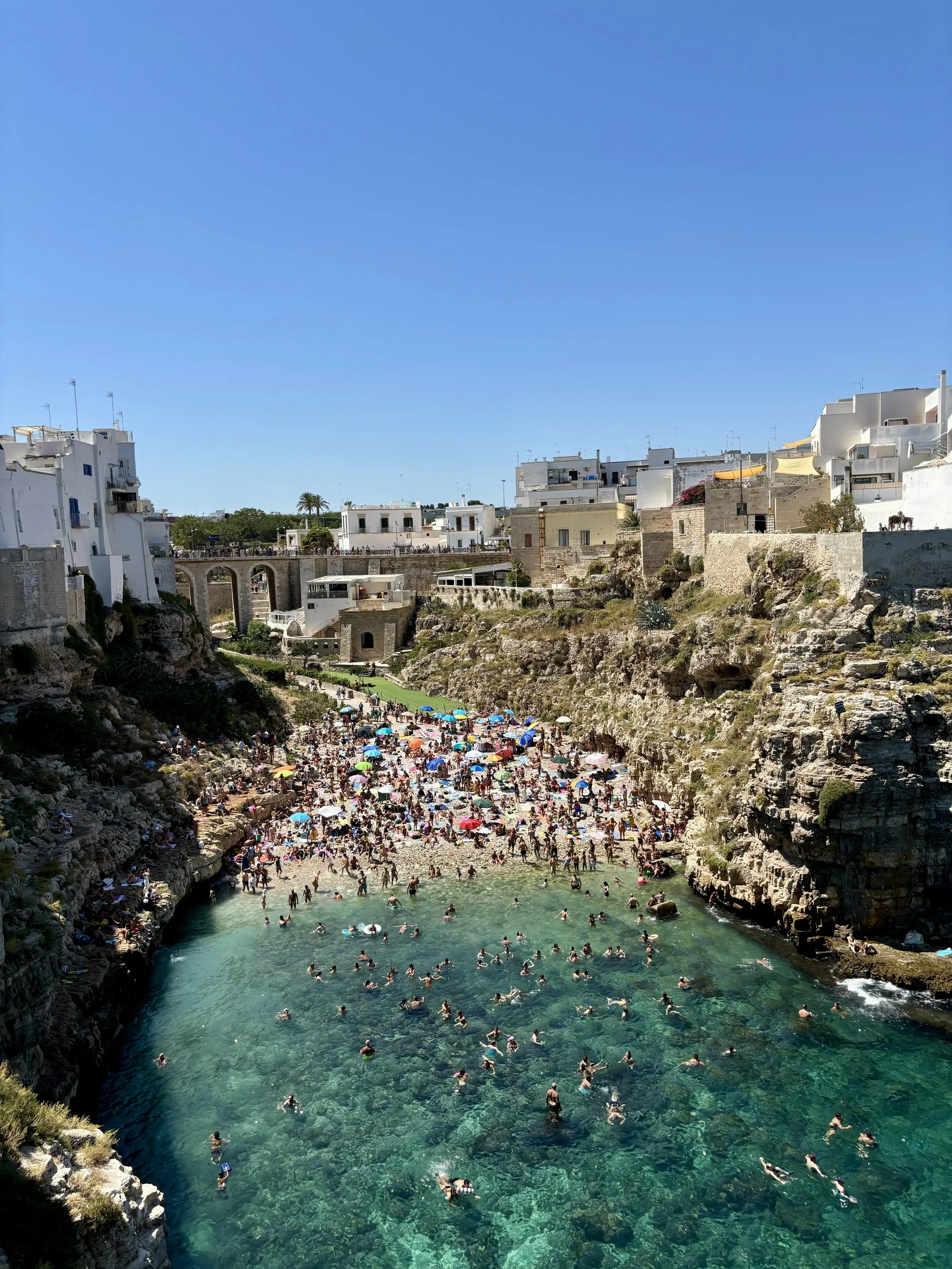
If you have seen pictures of Polignano a Mare, chances are Lama Monachile beach was in them. Tucked into a cove between the towering cliffs and underneath the ancient Ponte Borbonico (Bourbon Bridge), the pebble beach is one of the most crowded spots in the town, as well as the most photographed.
What to do in Polignano a Mare?
Wander through the streets and alleys of the pedestrianised Old Town (Centro Storico), in their maze like glory. Some turns will lead you to narrow residential streets decorated with plant pots, while others lead out to cliffside terraces overlooking the Adriatic. Visit Piazza Vittorio Emanuele II, the vibrant main square housing the clock tower.
Underneath the town, a series of caves open onto crystal clear water, best explored with a short boat tour along the coastline. There are several companies operating boat tours. I had booked this one, but unfortunately it was cancelled due to unsafe weather conditions and I wasn’t able to reschedule. This one on GetYourGuide is also highly rated.
Spend some time at the beautiful Lama Monachile beach. To beat the intense summer crowds, plan your visit for early in the day. Or, as the sun begins to set the beach also gets quieter if you are in the mood for a sunset dip.
From nearby ledges, thrill-seekers can also take the opportunity to dive from the rocks.
Where to Stay in Polignano a Mare?
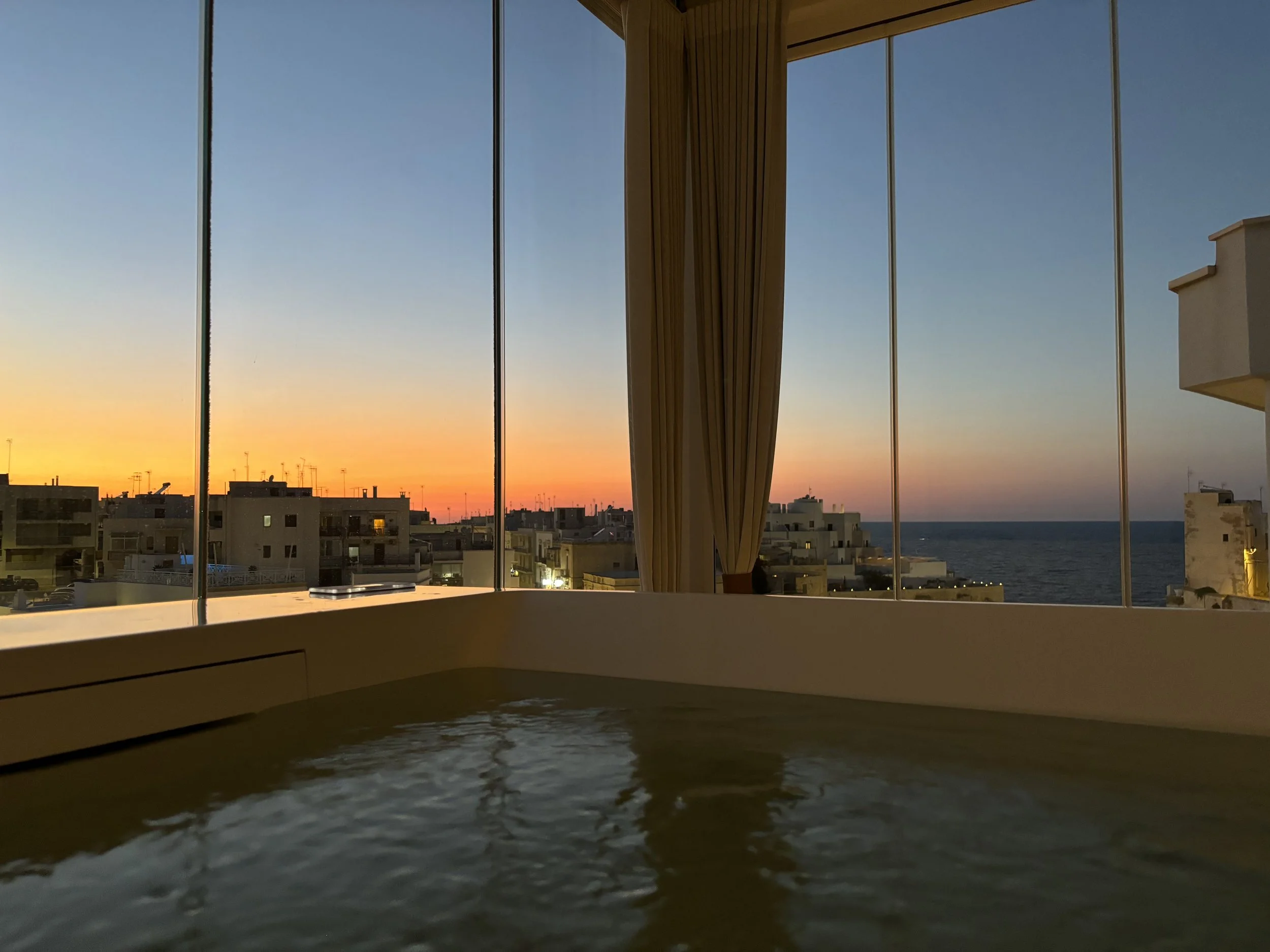
I stayed in White Coast in Polignano a Mare, in the ONDA suite, and it was the perfect stay. The suite has its own private hot tub on a balcony overlooking the cliffside whitewashed buildings and Ponte Borbonico (Bourbon Bridge). My personal highlight was watching sunset over the limestone cliffs while relaxing in the hot tub.
Monopoli
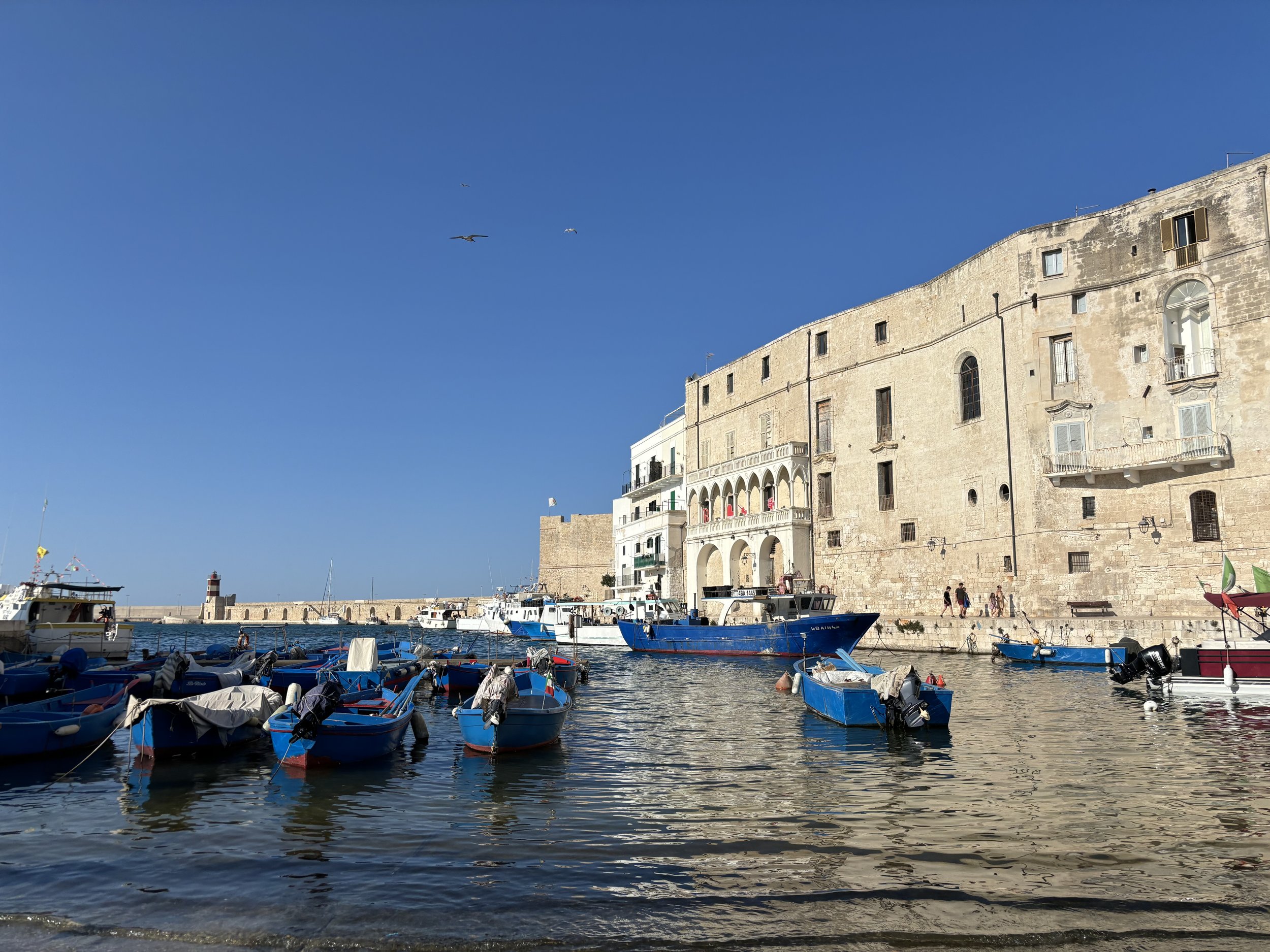
Just down the coast from Polignano a Mare, Monopoli feels like a quieter, more lived-in version of its famous neighbour.
The heart of Monopoli is the Old Harbour, where blue fishing boats sway on the water while fishermen mend their nets. There is a real buzz about this working harbour, as the fishermen go about their daily lives and passersby stop to observe.
Situated along the harbour is, Castello Carlo V, a medieval fortress serving as a gateway to the old town.
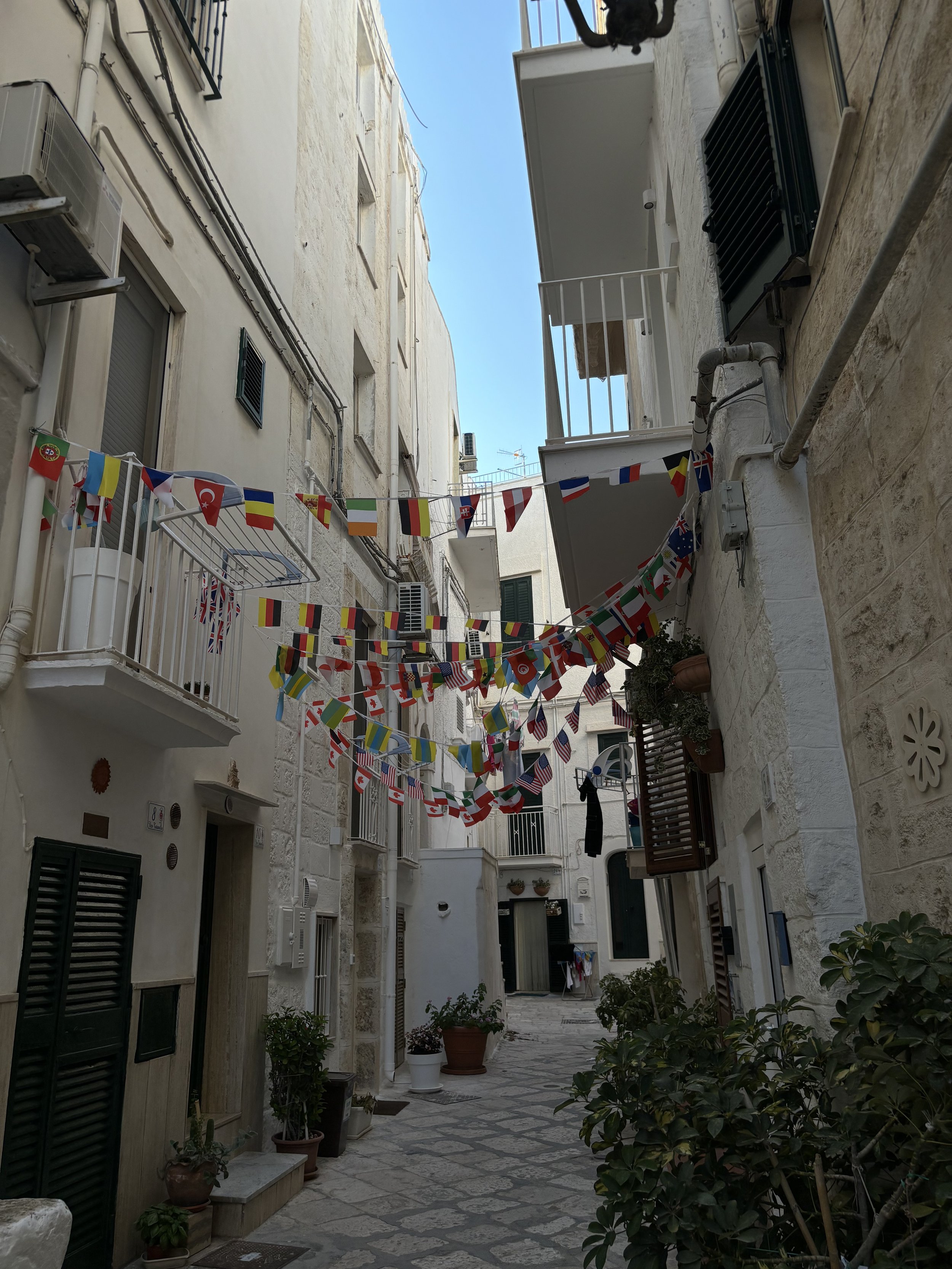
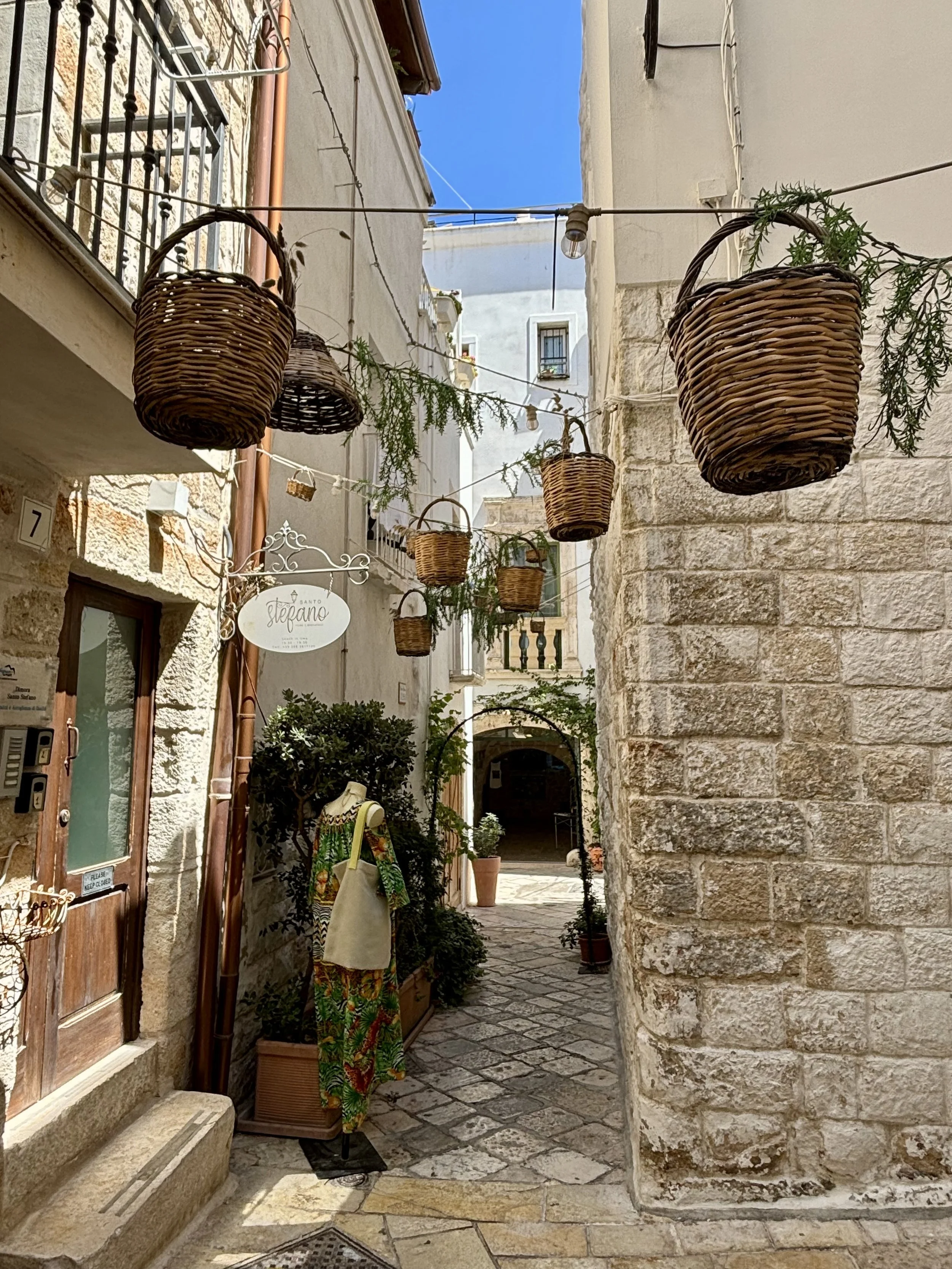
The old town here is again a maze of whitewashed buildings, their shutters painted shades of green. Narrow alleyways, strung with everything from sunflowers to flags to straw placemats, open up into piazzas. I really enjoyed wandering through the alleyways, taking in the relaxed vibe and old town charms, stopping off in some of the local cafes for a coffee or refreshing cold drink.
I visited Monopoli for an afternoon while staying in Polignano a Mare, as it is only an easy 12 minute train ride between the two towns.
Alberobello
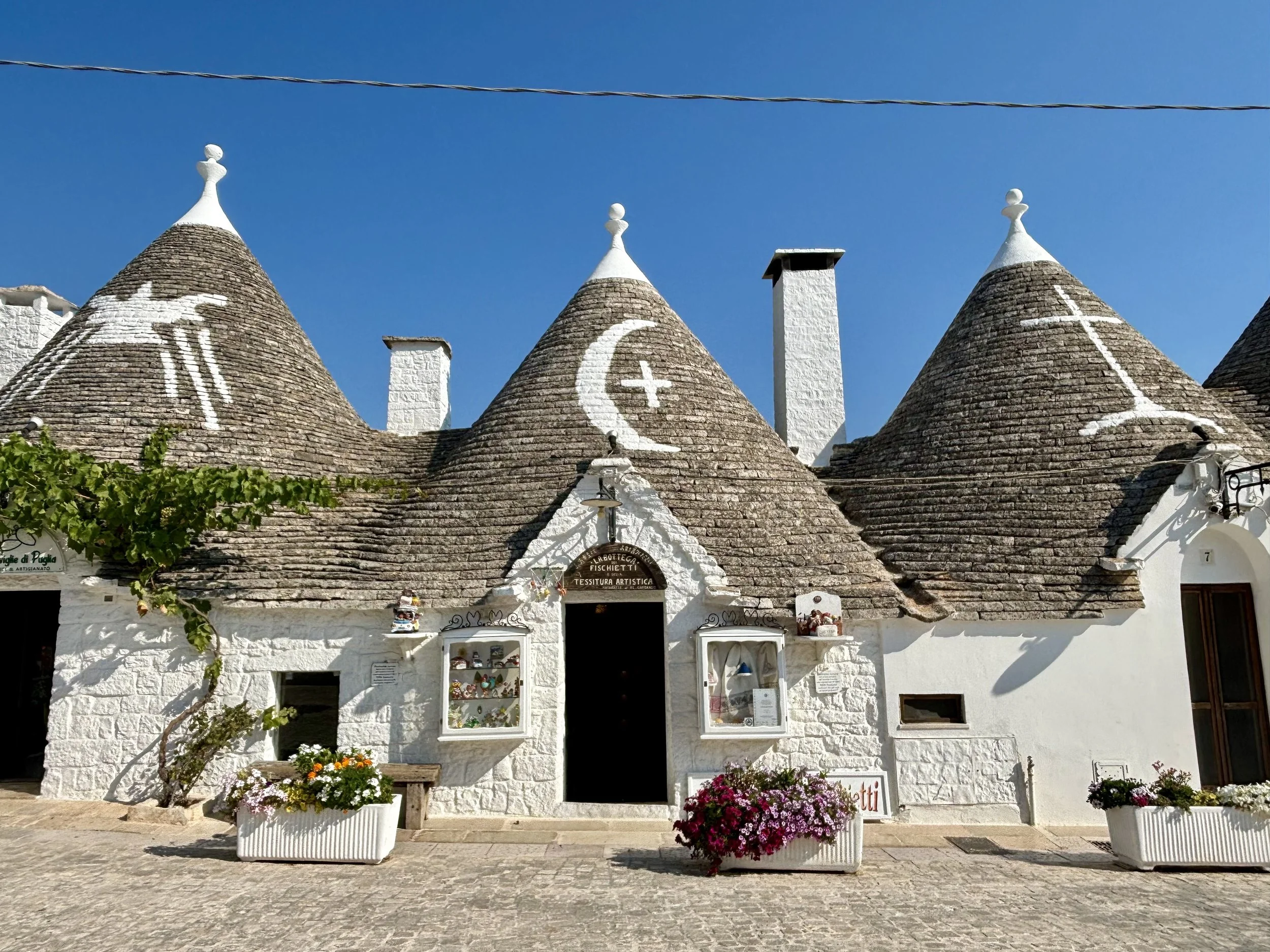
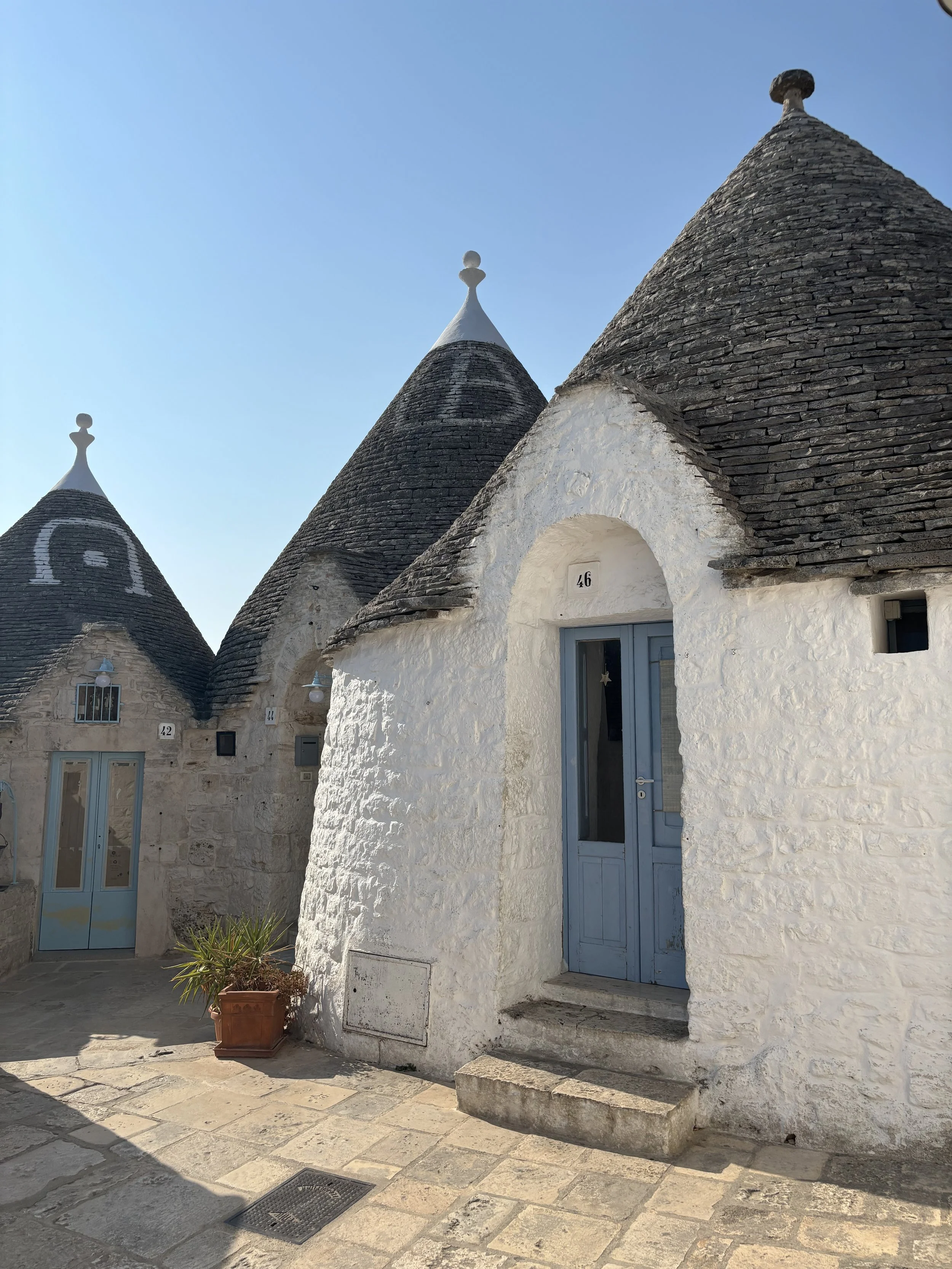
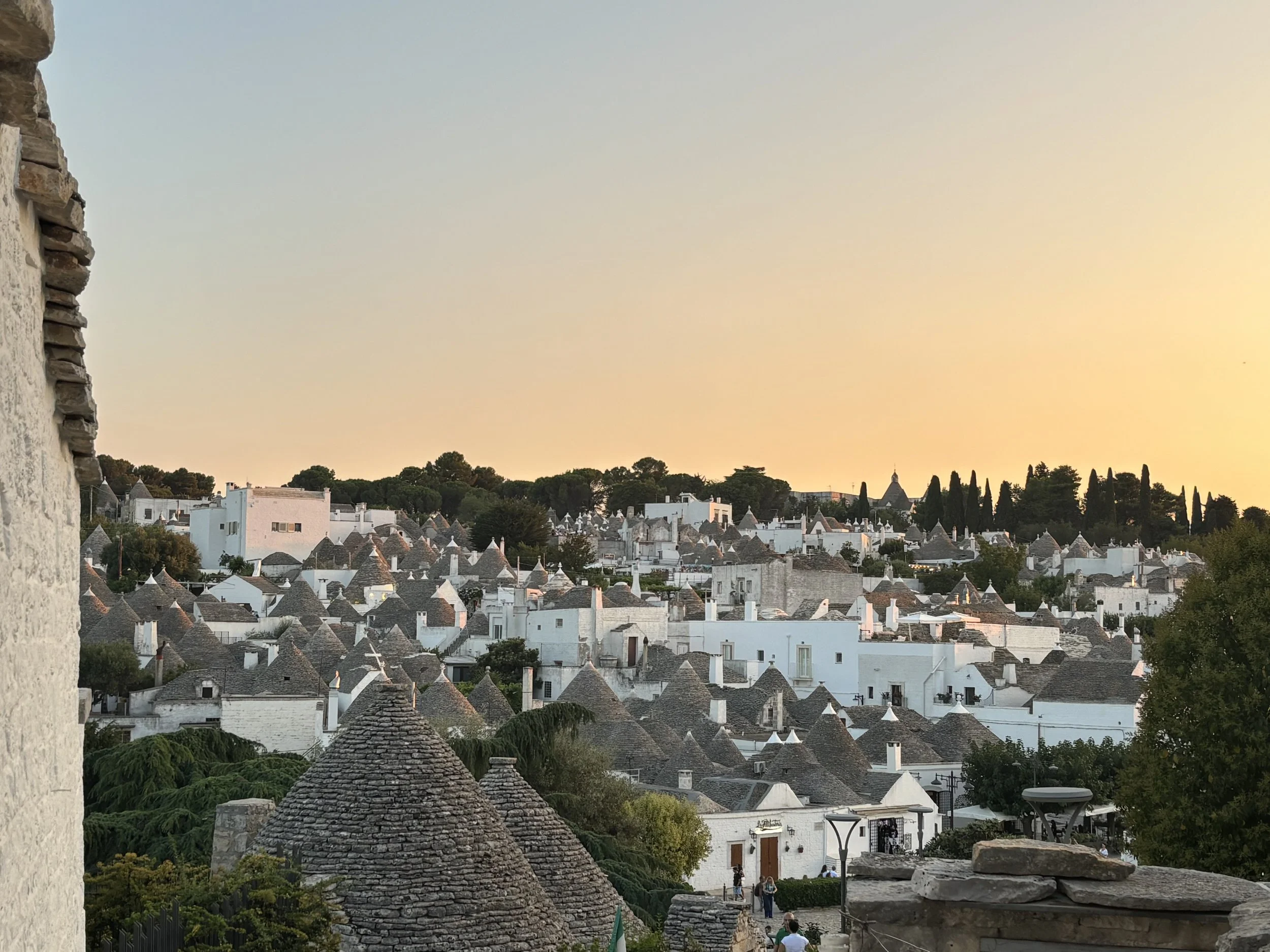
Alberobello feels like a town straight from a fairytale, with its entire neighborhoods of cone roofed houses called Trulli.
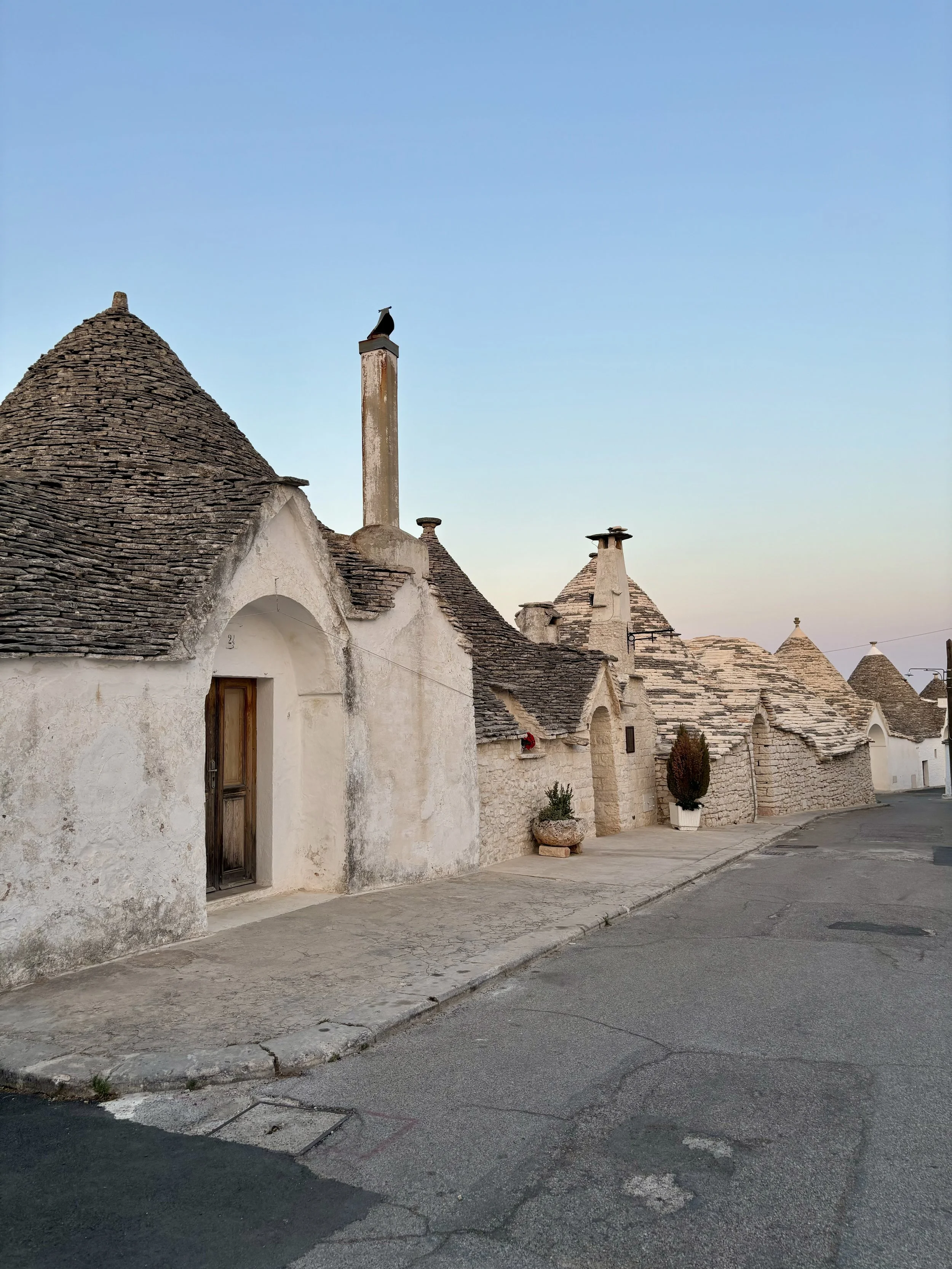
The Trulli of Alberobello were named a UNESCO World Heritage Site in 1996, and wandering between them, past their whitewashed walls and pointed grey stone roofs, it is easy to see why.
The distinctive dwellings, date back as early as the mid-14th century and more than 1,500 of them are located in Alberobello. Local legend has it that the conical stone roof design was used so the houses could be quickly dismantled to avoid paying property taxes imposed by the authorities on houses during that time.
What to do in Alberobello?
The best thing to do in Alberobello is simply explore the Trulli neighborhoods and get lost wandering among the unique Trulli houses.
There are two main neighborhoods worth exploring:
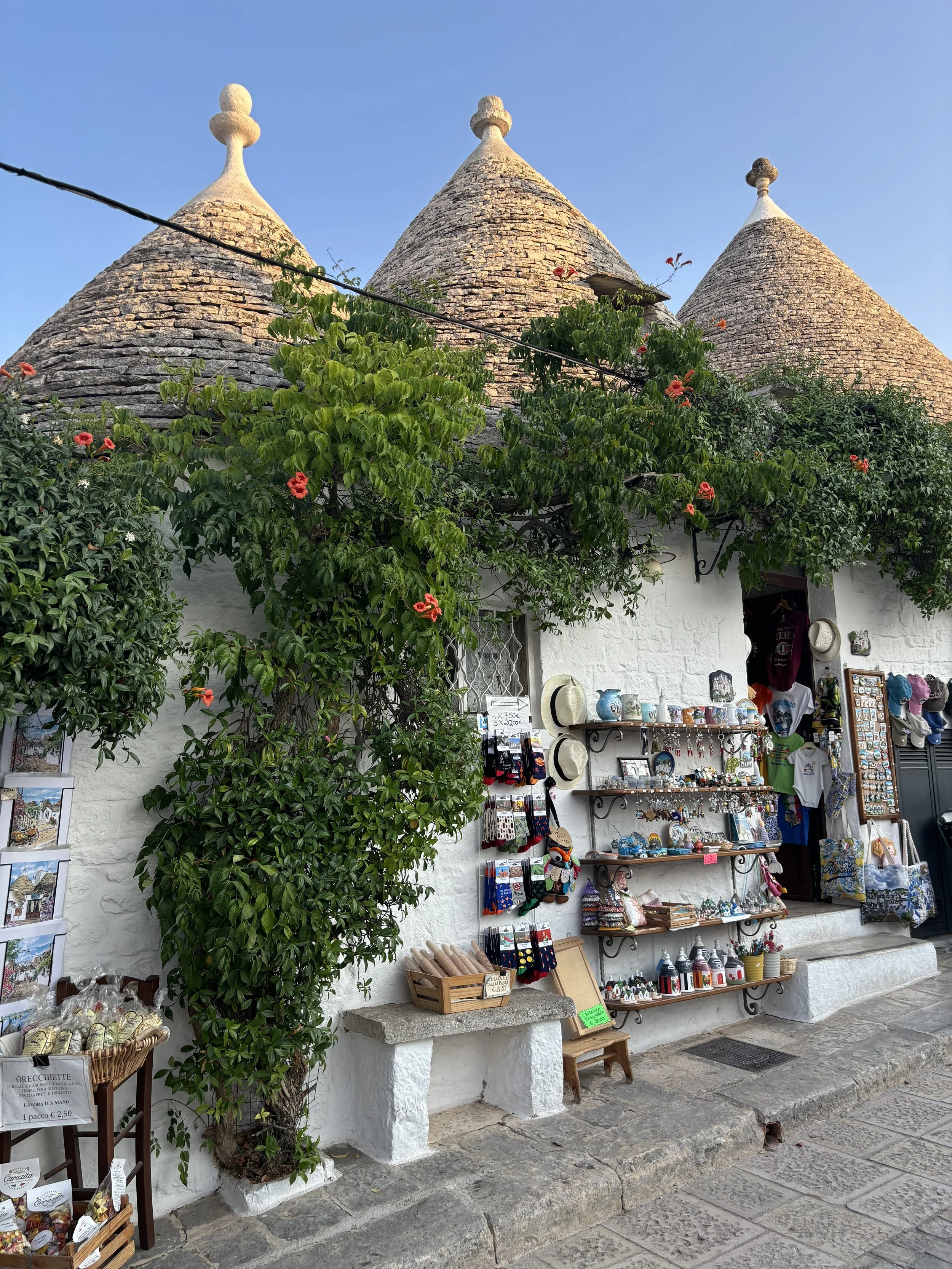
Rione Monti: the most famous neighborhood in Alberobello, with over 1,000 Trulli. This area is vibrant and busy, with many of the Trulli converted into shops, restaurants and accommodation for visitors. Make sure to check out Belvedere Santa Lucia, the panoramic viewpoint at the edge of the Monti district.
Rione Aia Piccola: a charming, quiet neighborhood with around 400 Trulli, this area is largely residential and so has a more authentic, lived in atmosphere than Rione Monti.
It is also worth visiting: Trullo Siamese, the only double Trulli in Alberobello which is located in the middle of the Monti district, and, Trullo Sovrano, the only two storey Trullo which now houses a heritage museum. Trullo Sovrano is located outside the Monti district at the top of the town, behind the church, in an area that has a mix of historical Trulli and more modern houses.
Where to Stay in Alberobello?
I stayed in Alberobello and booked a stay in a Trullo at Le Alcove, Luxury Hotel nei Trulli, which was a truly unique experience. The breakfast in the hotel also deserves a mention: served in the courtyard between the trulli houses, it was delicious with lots of variety on offer.
There is something special about being in Alberobello when it is quiet, before all the day trippers arrive, or after they leave: you can enjoy wandering around the neighborhoods when they are quieter and watch the sunset over the Trulli from one of the panoramic viewpoints.
I have a separate, more detailed blog post specifically on Alberobello here:Alberobello, Italy: A Guide to the Trulli of Alberobello
Matera
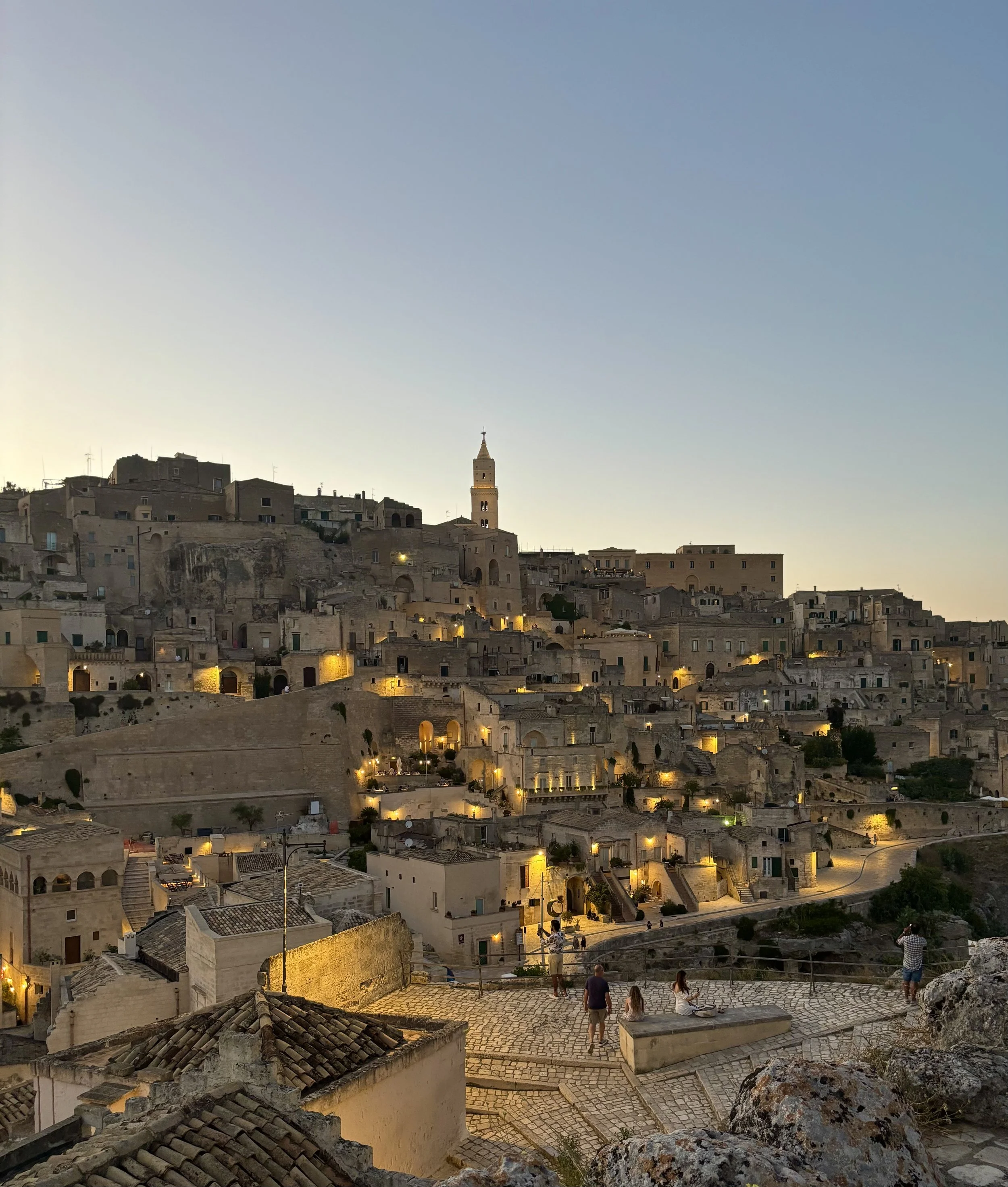
While not technically in Puglia, but rather nearby Basilicata, Matera is such a unique and breathtaking city that shouldn’t be skipped in an itinerary to this region of Italy. It ended up being the most memorable stop of my trip.
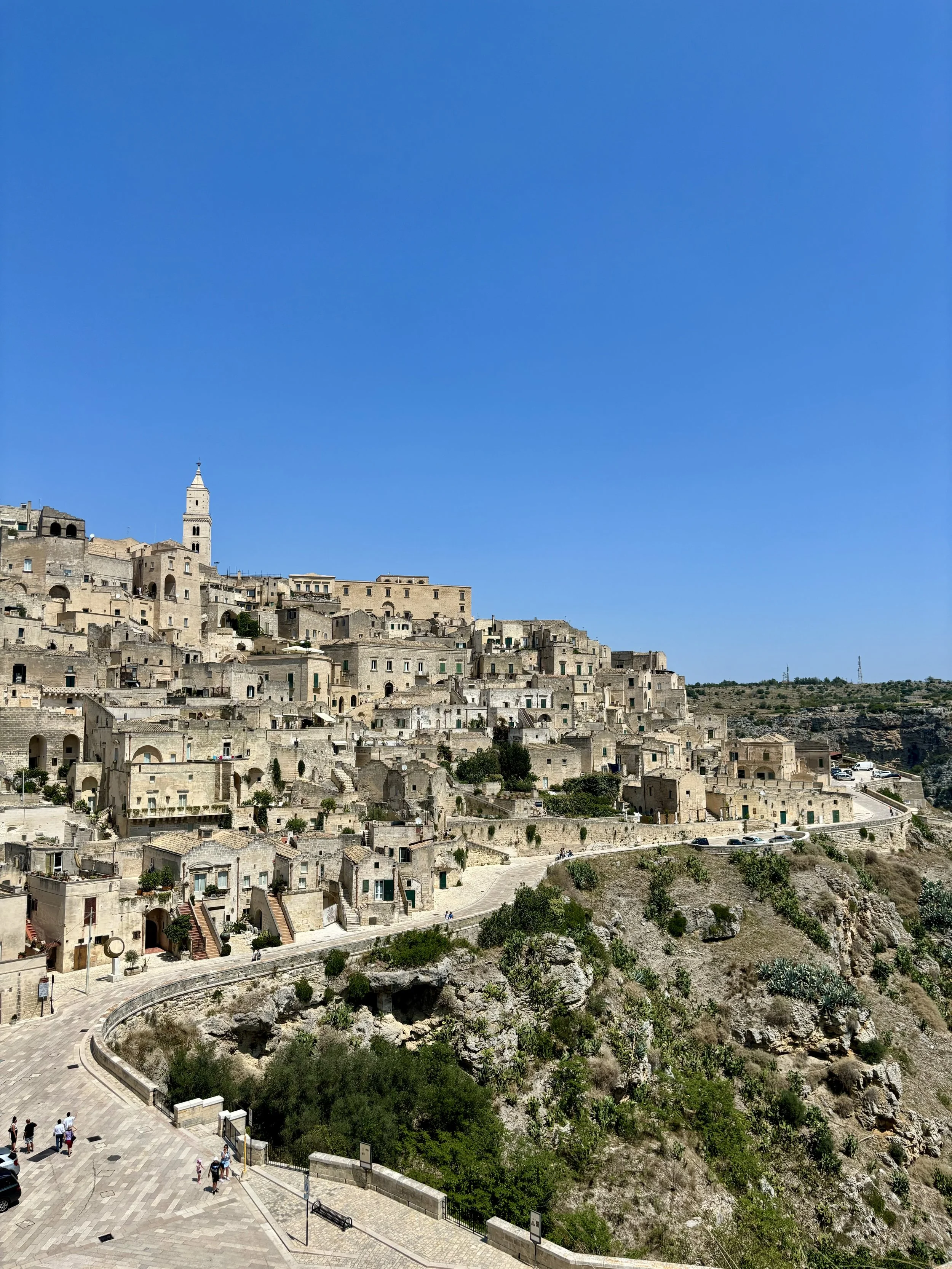
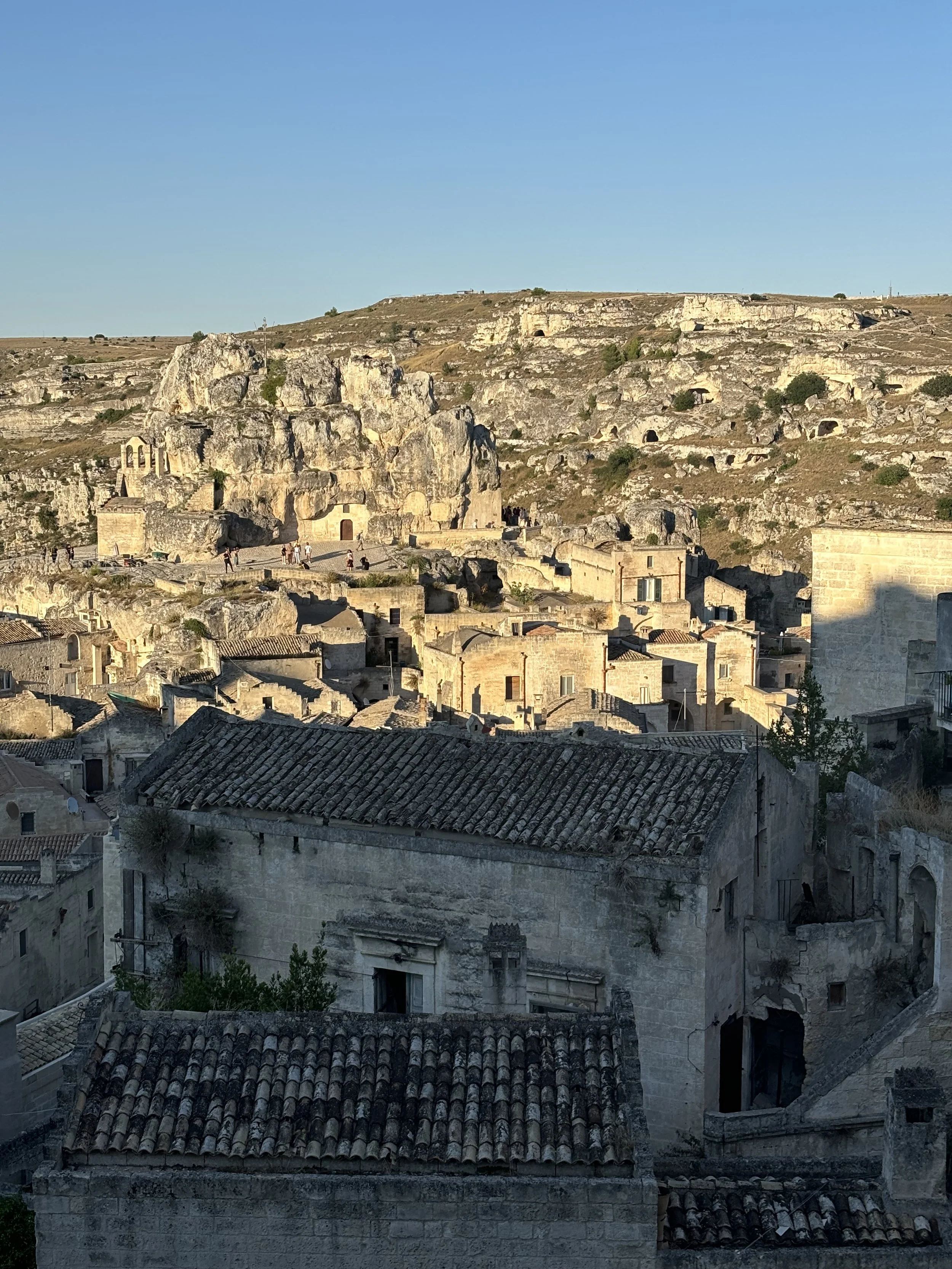
Matera, a city of caves, is one of the world's oldest continuously inhabited settlements and walking around the city feels like stepping back in time. The ancient cave dwellings, built directly into the rock and stacked one on top of another are in districts known as Sassi. The Sassi of Matera were named a UNESCO World Heritage Site in 1993.
The cave dwellings were continuously inhabited from the Palaeolithic era, up until the 1950’s, when the last residents were relocated to modern housing in the newer region of the city. The cramped, often unsanitary conditions of the caves were seen as an embarrassment for post-war Italy and the area had become known as “the shame of Italy.”
Today, many of the caves have been restored into boutique hotels and restaurants, while others remain untouched, at least for now. The combination of old and new adds to the character and charm of Matera. If you are an avid movie fan, you might recognise Matera from movies such as: The Passion of the Christ, James Bond No Time to Die, and, Wonder Woman, which were filmed here.
What to do in Matera?
A Matera walking tour is a great way to start your time here. I booked this one and the guide was brilliant, he was very passionate and knowledgeable about the area and its history. Learning about the history of Matera gives you a better appreciation for the place as you explore further on your own later.
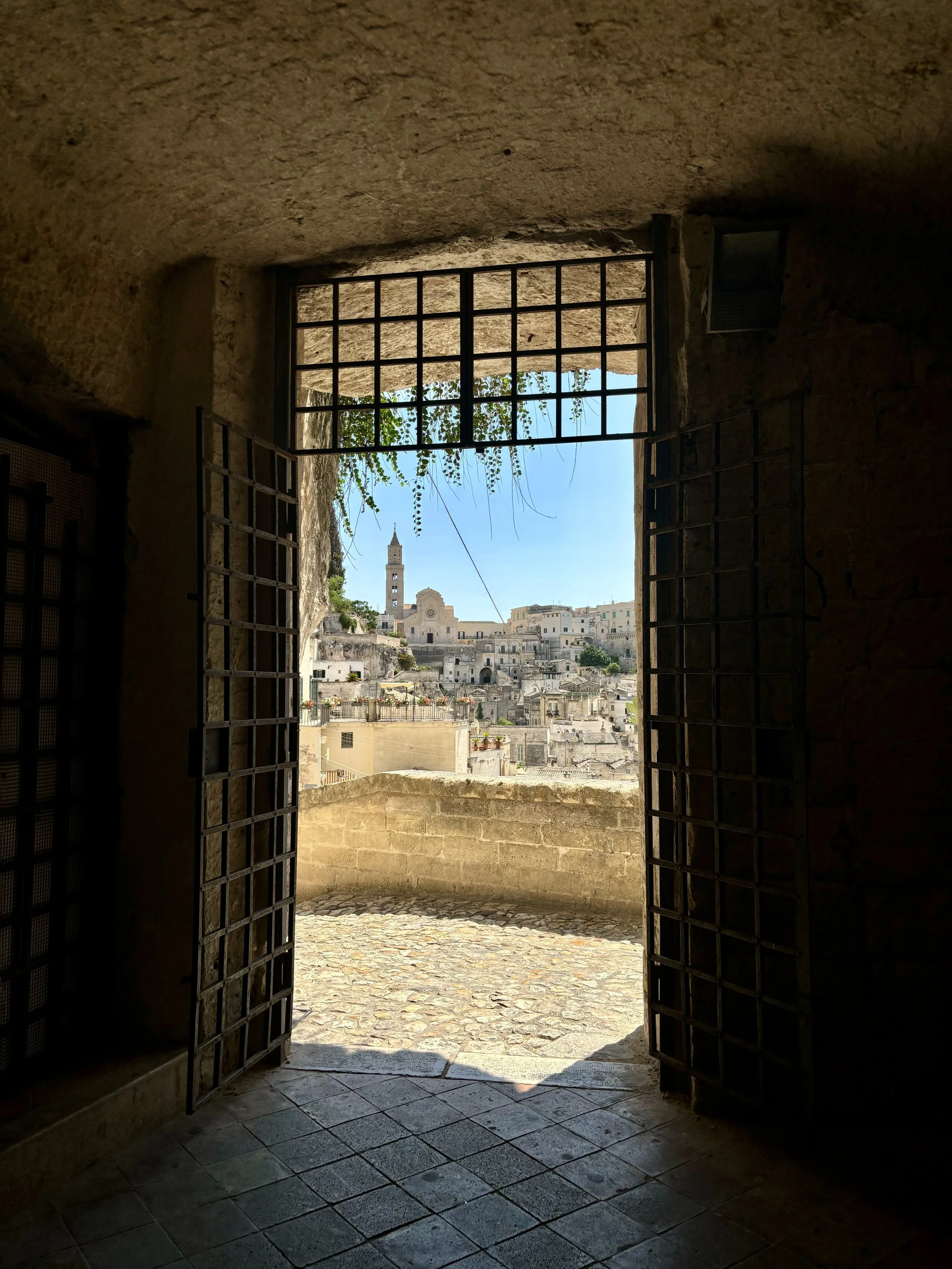
The next best thing to do in Matera is simply wander through the Sassi, letting the maze of alleyways, staircases and hidden courtyards lead you wherever they want. It can be almost disorienting, as you can't always tell where the rock ends and the buildings begin, but that all adds to the experience.
There are two main districts (Sassi) worth exploring:
Sasso Barisano: the livelier and more restored of the two districts, home to most of the cave hotels, restaurants, bars and shops, this is a good place to start. Check out the Church of San Pietro Barisano, the largest cave church in the city.
Sasso Caveoso: the older and quieter of the two districts, with rawer cave façades and narrower lanes. This is where you’ll find some of the best views in Matera, looking down towards the canyon and across to the rock church of Santa Maria di Idris. It’s also home to Casa Grotta, a preserved cave house museum that gives a real sense of what life here looked like before the 1950s.
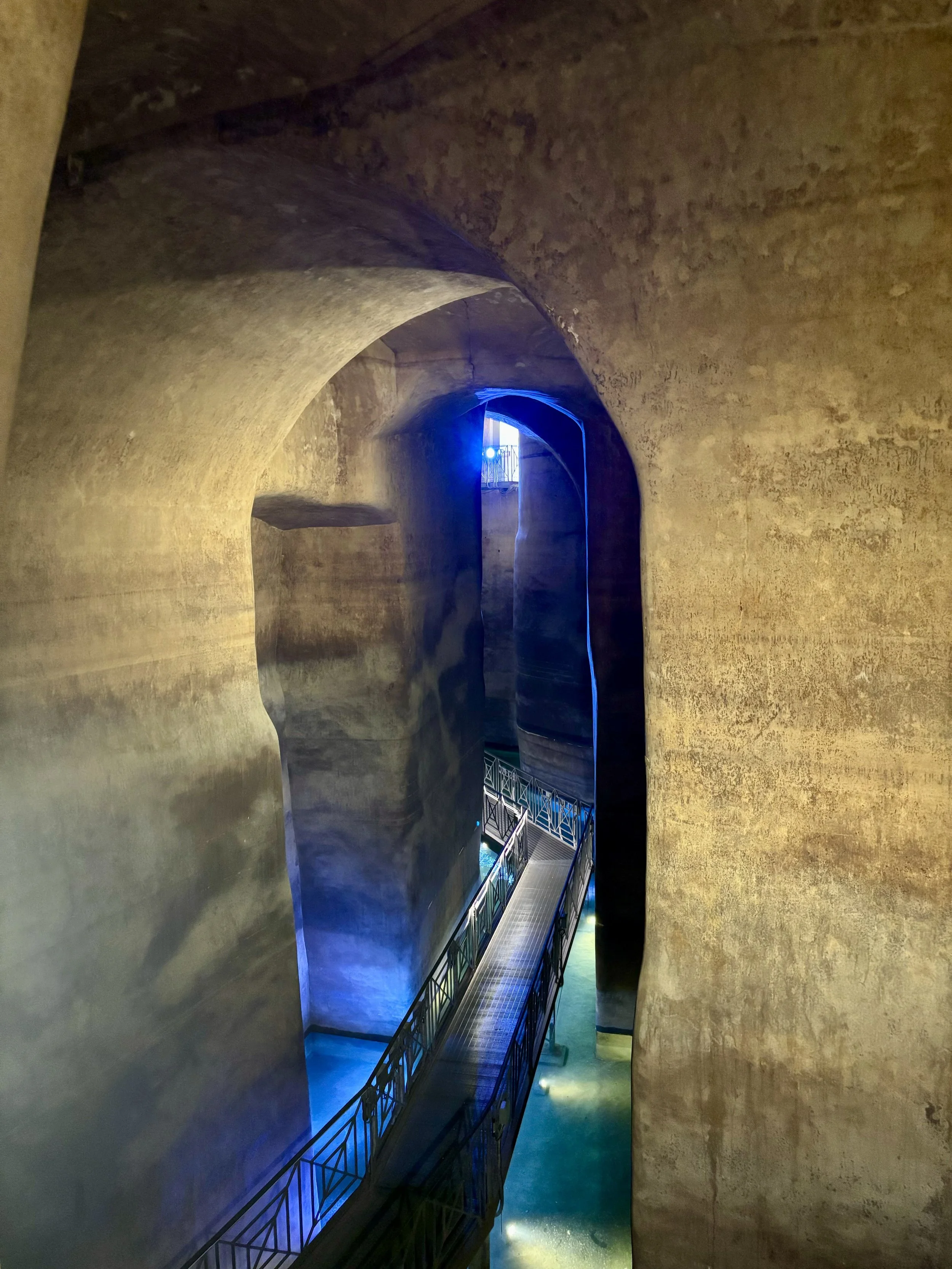
While in Matera, it’s also worth visiting: Palombaro Lungo, a massive subterranean ancient water cistern carved into the rock below, and, Murgia Materana Park which is on the other side of the canyon. You can reach the other side of the canyon either by hiking, which includes crossing the Ponte Tibetano della Gravina suspension bridge (wear appropriate walking shoes), or, by car. From the park you can see a postcard view of the whole city of Matera across the canyon.
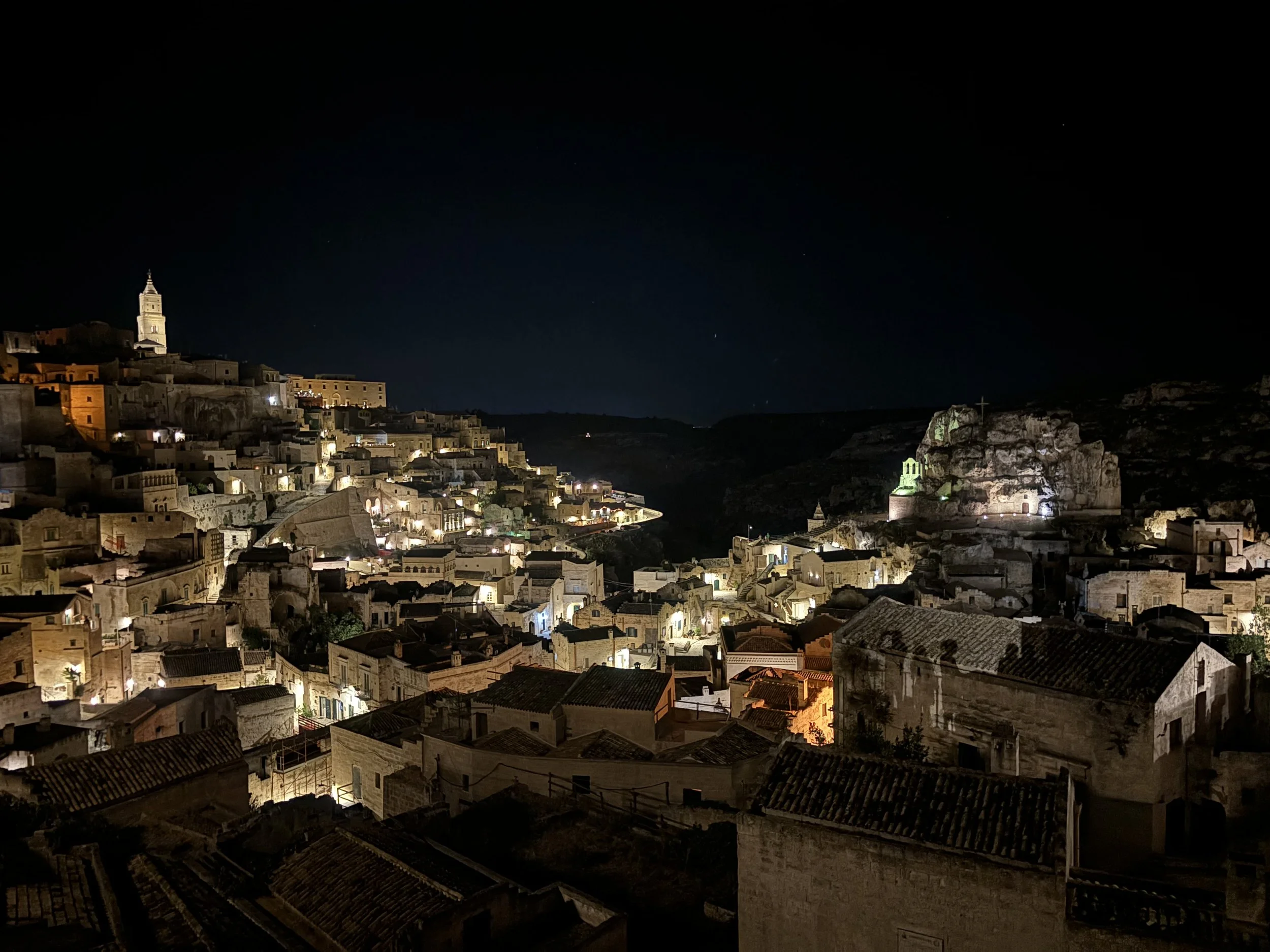
Last but by no means least, make sure to watch the sun settting over the Sassi as the caves turn a golden hue. This is enchanting whether watched from the Sassi itself, or, across the canyon in Murgia Materana Park.
Where to Stay in Matera?
I would highly recommend spending a night in Matera to fully immerse in the city and experience it both during the day, and, in the quiet of night when the Sassi is lit up by the soft glow of warm lights.
I stayed in a cave hotel, Le MalveCaveRetreat, with a room carved directly into the rock. It was an experience unlike anywhere else I’ve stayed. There’s something surreal about staying in a cave room that people have inhabited for centuries, with the cool stone walls and vaulted ceilings, but now fully equipped with modern amenities, including a fabulous waterfall shower. This hotel was the icing on the cake for a magical stay in Matera.
I have a separate, more detailed blog post specifically on Matera here: Matera, Italy: A Guide to the Ancient Sassi Cave City
Puglia has a lot to offer, in just these four stops you have: stunning coastlines, cliffs, harbors, fairytale villages, quaint old towns and an ancient city that still feels alive. And you are of course in Italy so as always the food is delicious, with southern Italian delicacies and specialities to delight your taste buds with.
If you're planning a trip through the region, these are four stops worthy of considering incorporating in your itinerary too.
Practical Planning Tips:
The main airport serving the region is located in Bari. There is a smaller airport in Brindisi.
To get around Puglia and Basilicata you can rent a car, use private transfers, or, use the train and bus network. I have provided some detail on travelling around the area by train and bus below.
How to Travel Around Puglia Without a Car:
Puglia's public transport runs across a few different operators: Trenitalia for the coastal towns, FSE (Ferrovie del Sud Est) for Alberobello, and FAL (Ferrovie Appulo Lucane) for Matera. It’s worth downloading the Trainline app or checking each operator's site directly, since not all routes show up on Google Maps.
Trains run from Bari Centrale to each of Polignano a Mare, Monopoli, Alberobello and Matera.
Regular Trenitalia trains run from Bari Centrale to Polignano a Mare in around 30–40 minutes.
Monopoli is just one train stop further south of Polignano a Mare: around 12 minutes.
Alberobello is reached via. the FSE train from Bari, with a journey time of around 1.5 hours. Or you can travel by bus, which can be quicker depending on the timetable on the day. Buses depart from the back of Bari Centrale station. The FSE train also operates from Polignano a Mare to Alberobello, with direct routes taking around 1 hour.
Matera can be reached from Bari via. the FAL train, with a journey time of around 1 hour 45 minutes to 2.5 hours depending on the route and connections, or, the bus operated by ItaBus is quicker with a journey time of around 1 hour. Note that trains don't run on Sundays, so you'll need to take the bus instead which must be booked online in advance.
FlixBus also operates a bus service between Bari (both the city and airport) and Matera.