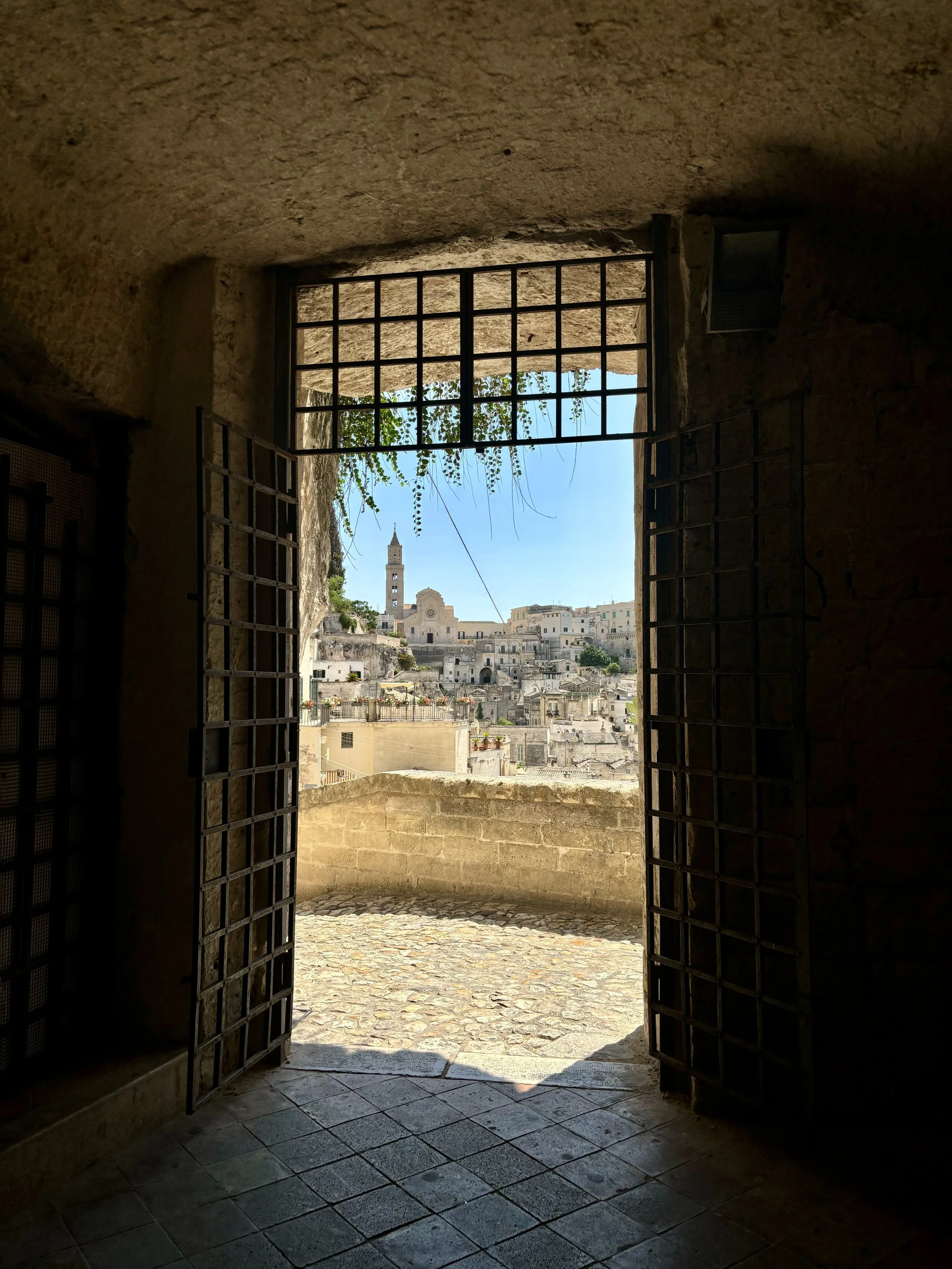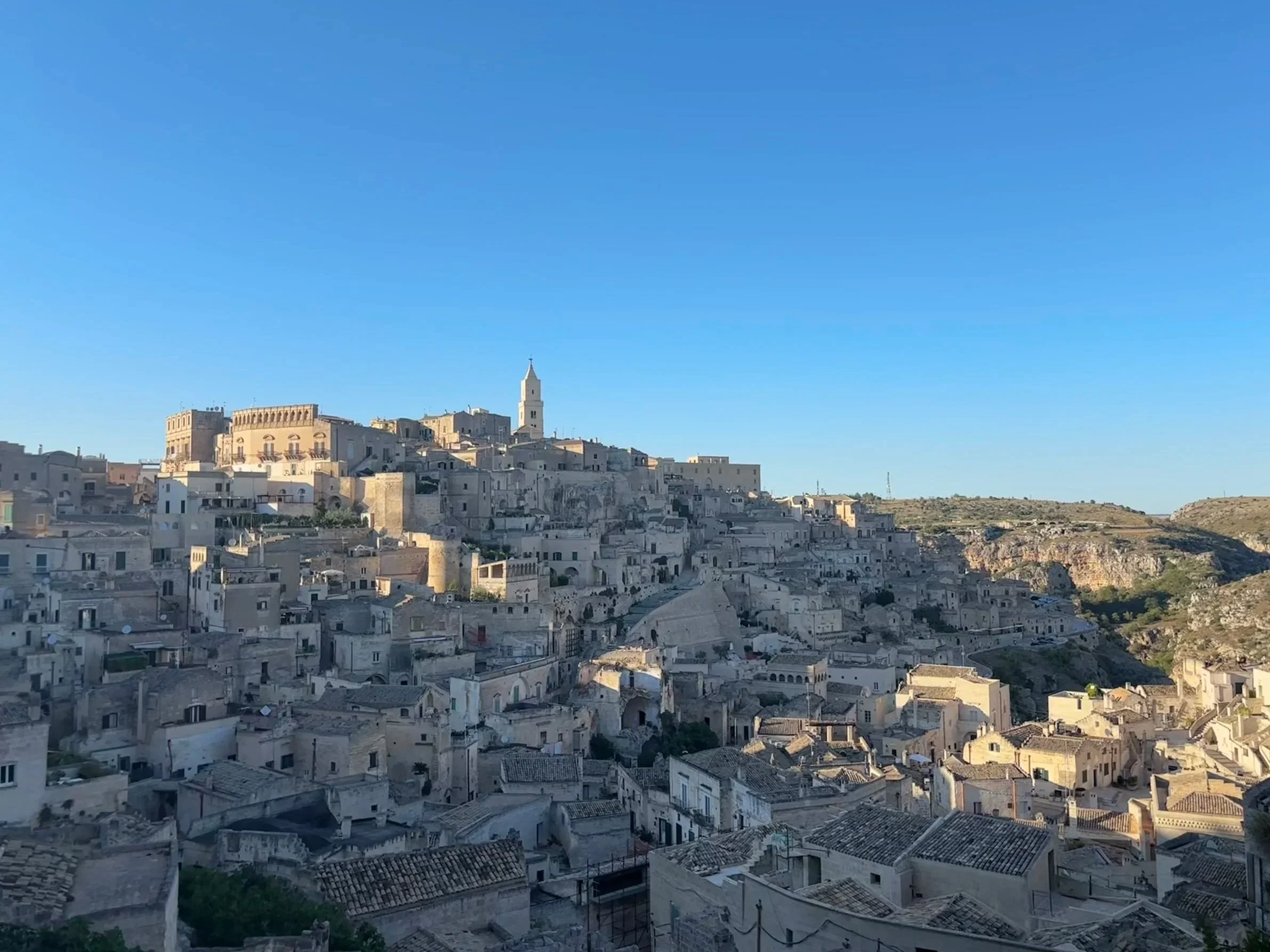

Matera, Italy: A Guide to the Ancient Sassi Cave City
August 2026
Please Note: This post contains affiliate links, meaning if you book through them I may earn a small commission, at no extra cost to you. I only recommend things I personally use and believe in.
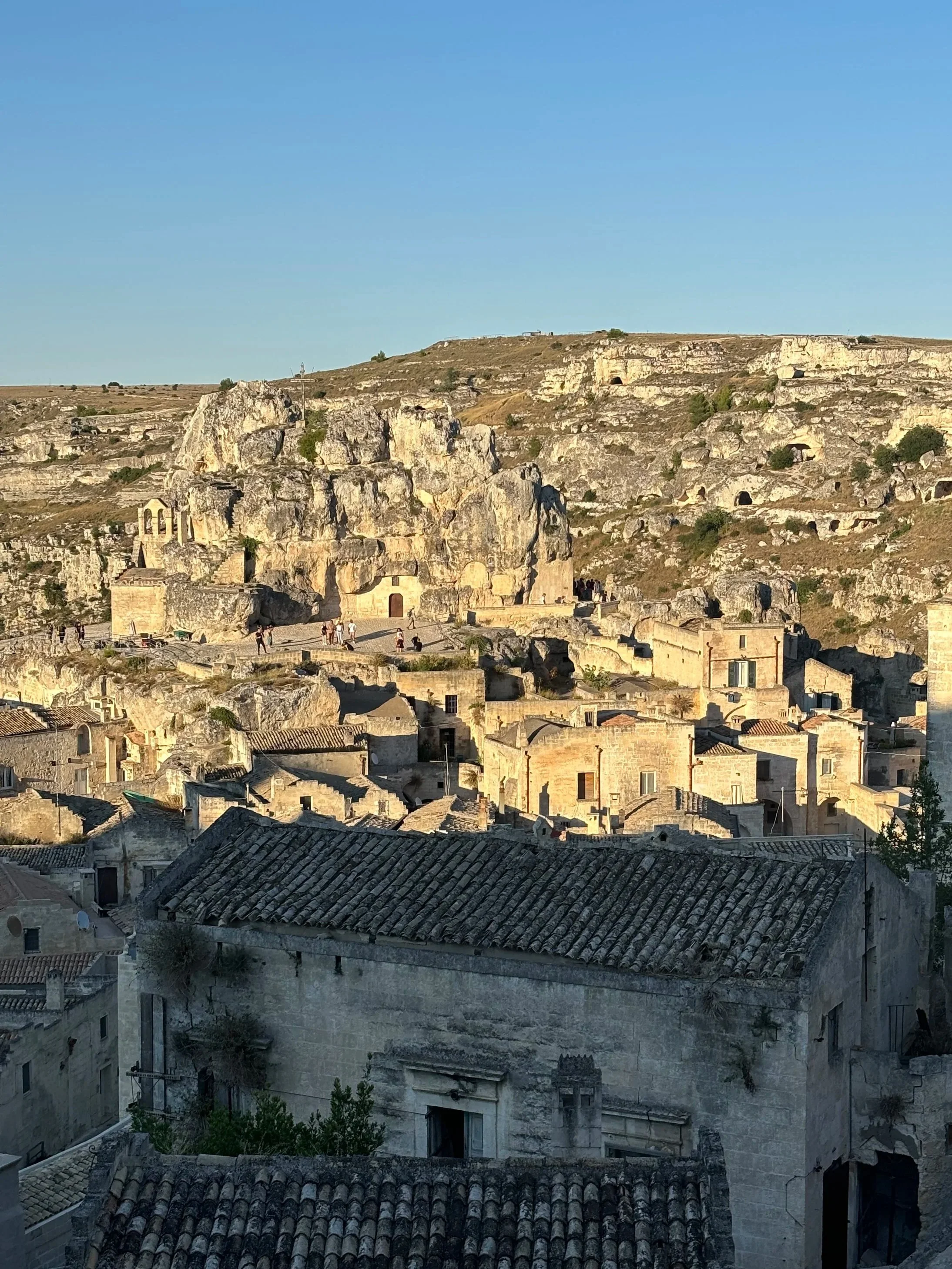
Matera, a city of caves, is one of the world's oldest continuously inhabited settlements and walking around the city feels like stepping back in time. The ancient cave dwellings, built directly into the rock and stacked one on top of another are in districts known as Sassi. The Sassi of Matera were named a UNESCO World Heritage Site in 1993.
The cave dwellings were continuously inhabited from the Palaeolithic era, up until the 1950’s, when the last residents were relocated to modern housing in the newer region of the city. The cramped, often unsanitary conditions of the caves were seen as an embarrassment for post-war Italy and the area had become known as “the shame of Italy.”
Today, many of the caves have been restored into boutique hotels and restaurants, while others remain untouched, at least for now. The combination of old and new adds to the character and charm of Matera. If you are an avid movie fan, you might recognise Matera from movies such as: The Passion of the Christ, James Bond No Time to Die, and, Wonder Woman, which were filmed here.
Where is Matera?
Matera, is in the Basilicata region of Southern Italy, and borders the Puglia and Calabria regions, as well as the Tyrrhenian and Ionian Seas.
I combined my visit to Matera with a visit to the Puglia region of Italy (see my blog post on this trip here), and Matera ended up being the most memorable stop of my entire trip. It is such a unique and breathtaking city that shouldn’t be skipped in an itinerary to this area of Italy.
What to do in Matera?
A Matera walking tour is a great way to start your time here. I booked this one and the guide was brilliant, he was very passionate and knowledgeable about the area and its history. Learning about the history of Matera gives you a better appreciation for the place as you explore further on your own later.
The next best thing to do in Matera is simply wander through the Sassi, letting the maze of alleyways, staircases and hidden courtyards lead you wherever they want. It can be almost disorienting, as you can't always tell where the rock ends and the buildings begin, but that all adds to the experience.
There are two main districts (Sassi) worth exploring:
Sasso Barisano: the livelier and more restored of the two districts, home to most of the cave hotels, restaurants, bars and shops, this is a good place to start. Check out the Church of San Pietro Barisano, the largest cave church in the city.
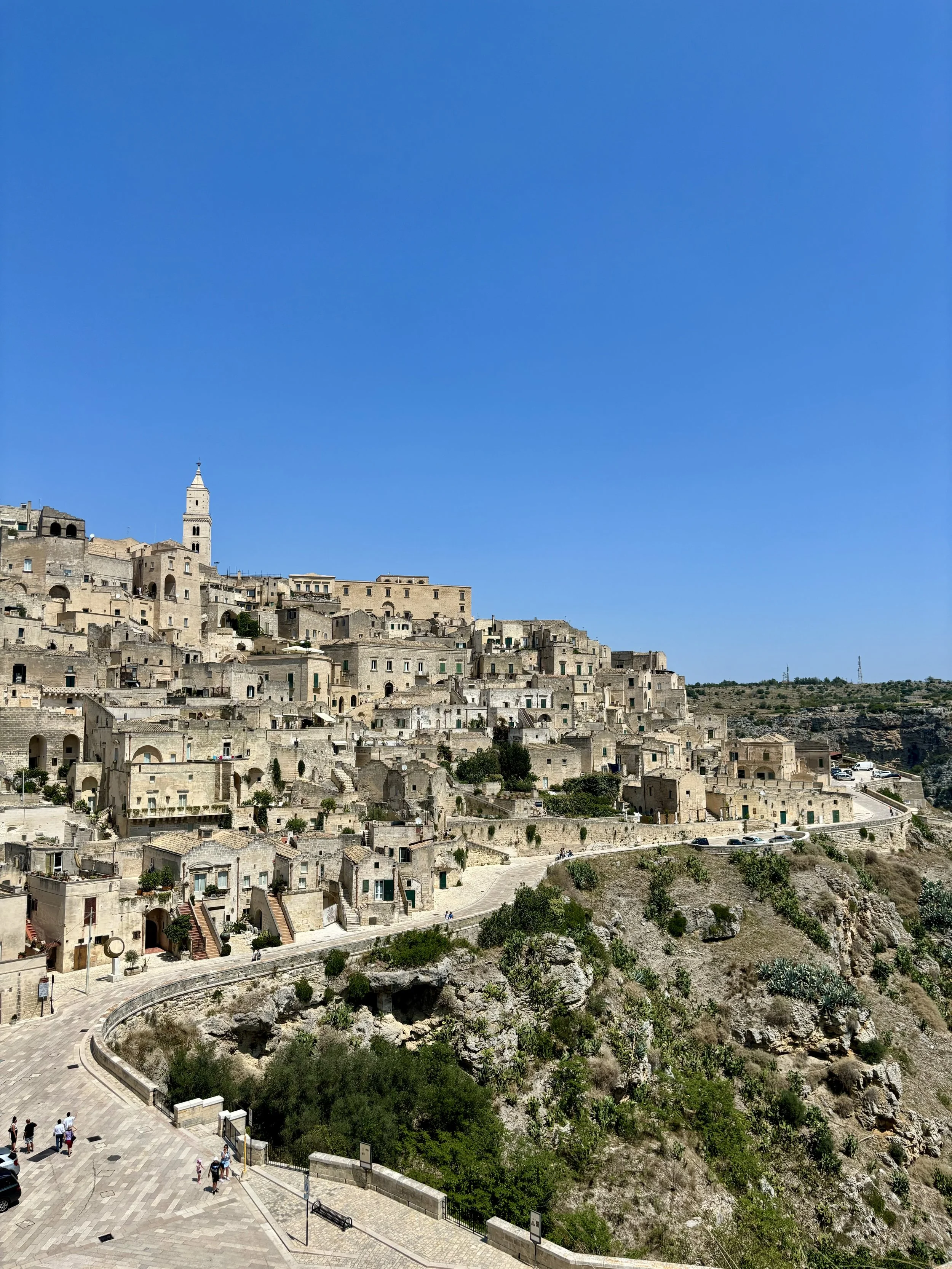
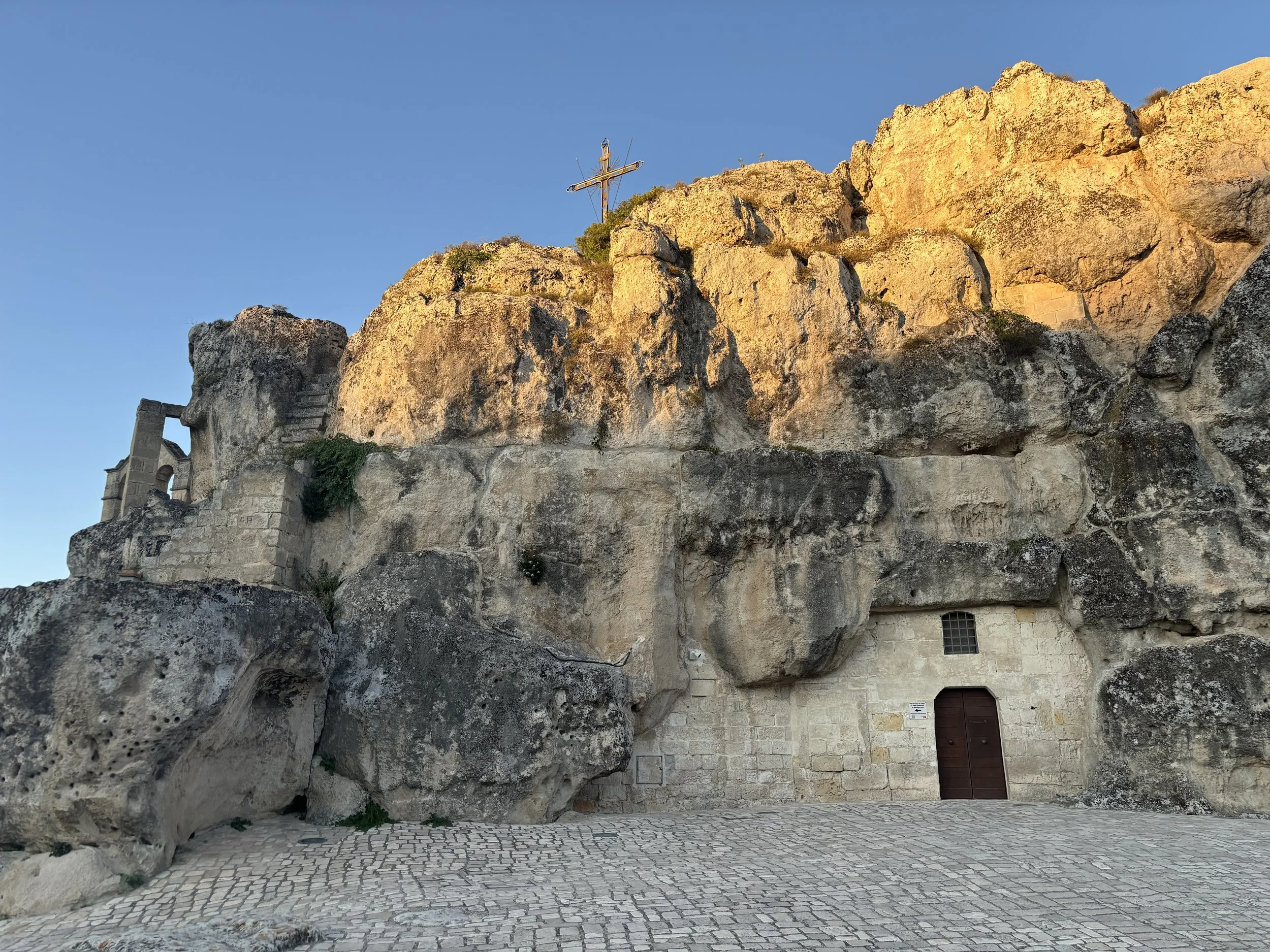
Sasso Caveoso: the older and quieter of the two districts, with rawer cave façades and narrower lanes. This is where you’ll find some of the best views in Matera, looking down towards the canyon and across to the rock church of Santa Maria di Idris. It’s also home to Casa Grotta, a preserved cave house museum that gives a real sense of what life here looked like before the 1950s.
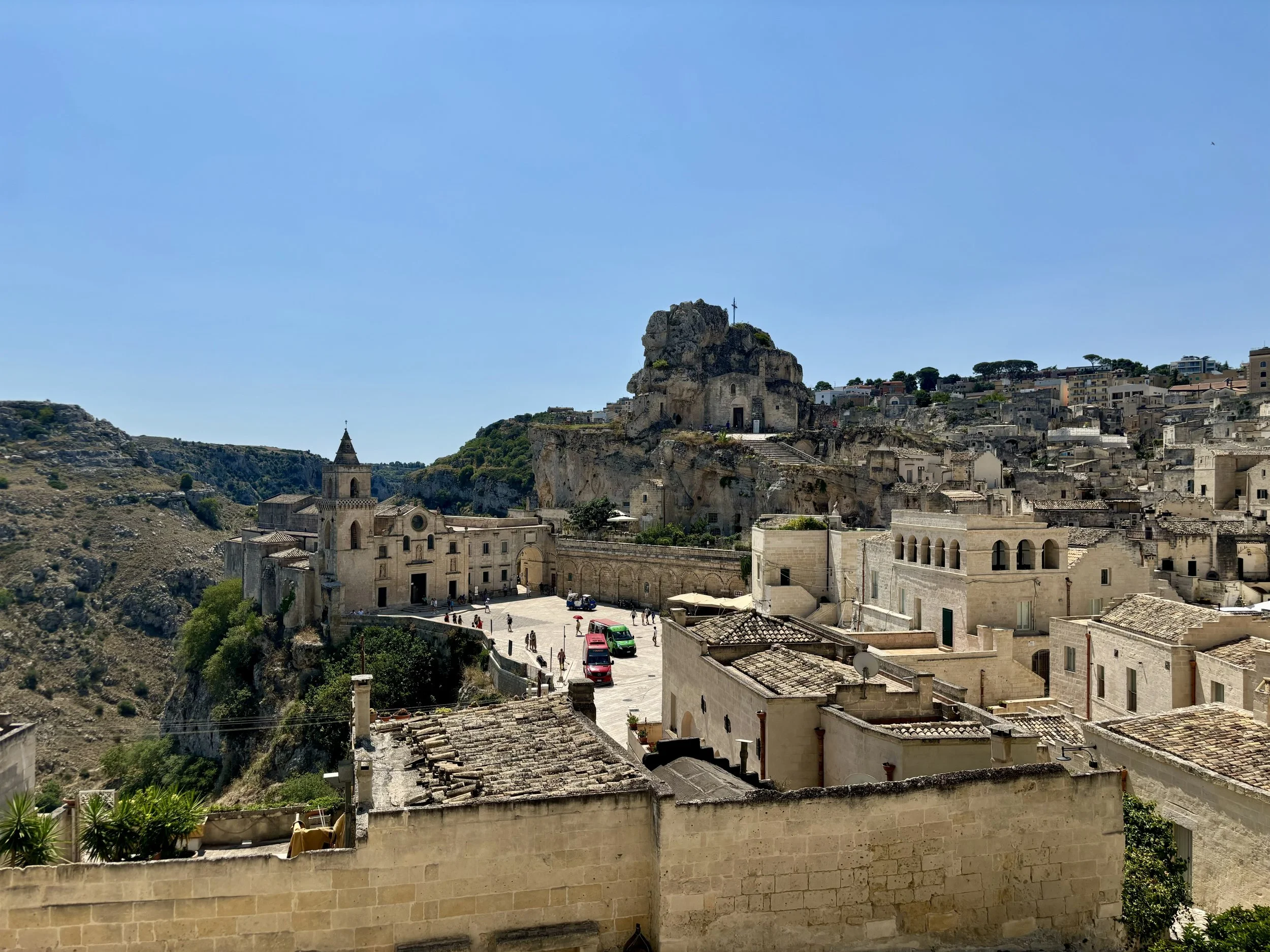
While in Matera, it’s also worth visiting Palombaro Lungo, a massive subterranean ancient water cistern carved into the rock below. A visit to Palombaro Lungo involves a guided tour of the ancient water cistern, first down sets of steps into the cistern and then along elevated pathways through it. The tour takes approx. 25 to 30 minutes and at a cost of €3 per ticket (price correct as at time of writing), it is well worth doing. It is very interesting to see the vast scale of the subterranean cistern and learn how it was used to supply water to the city.
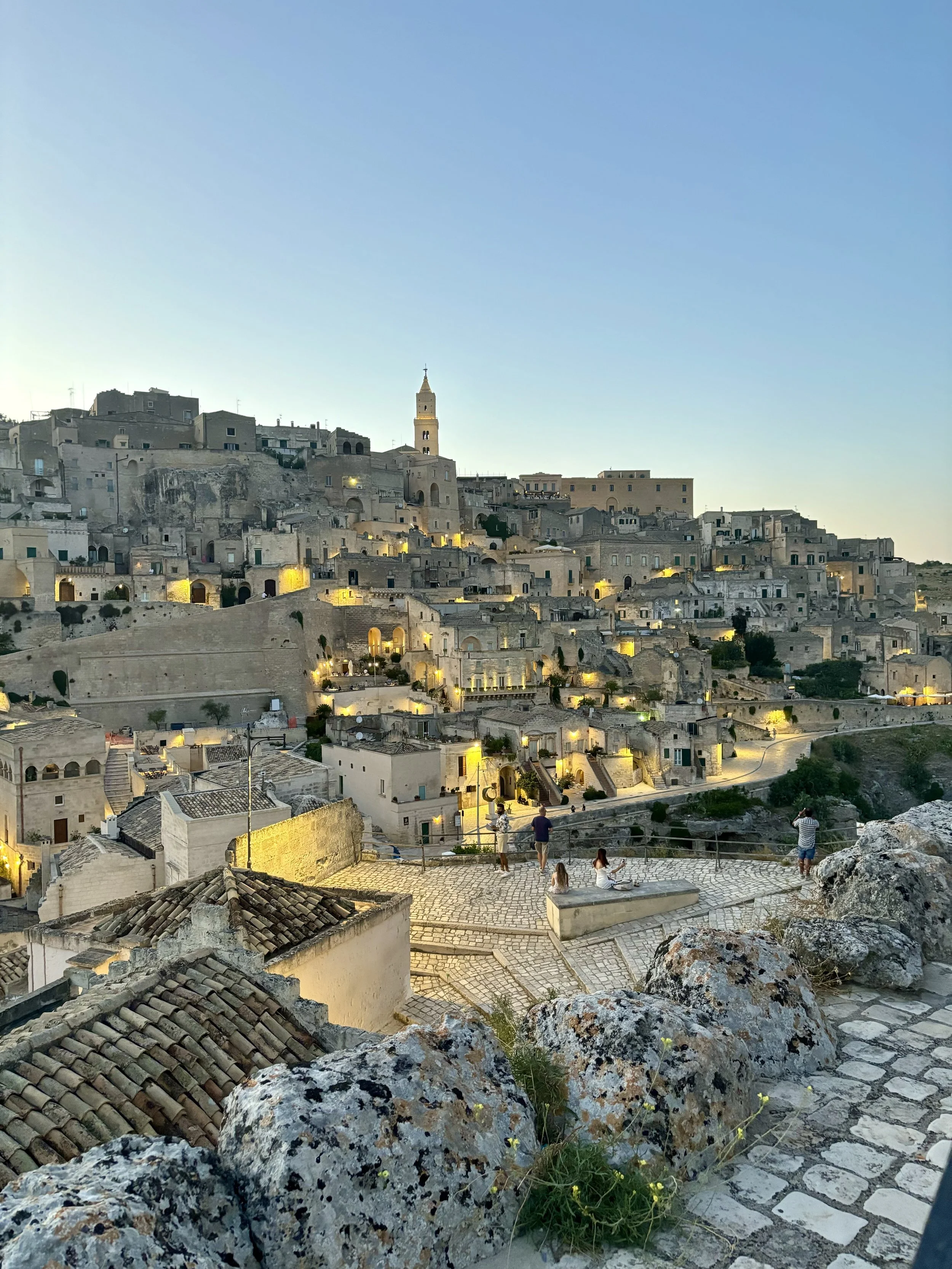
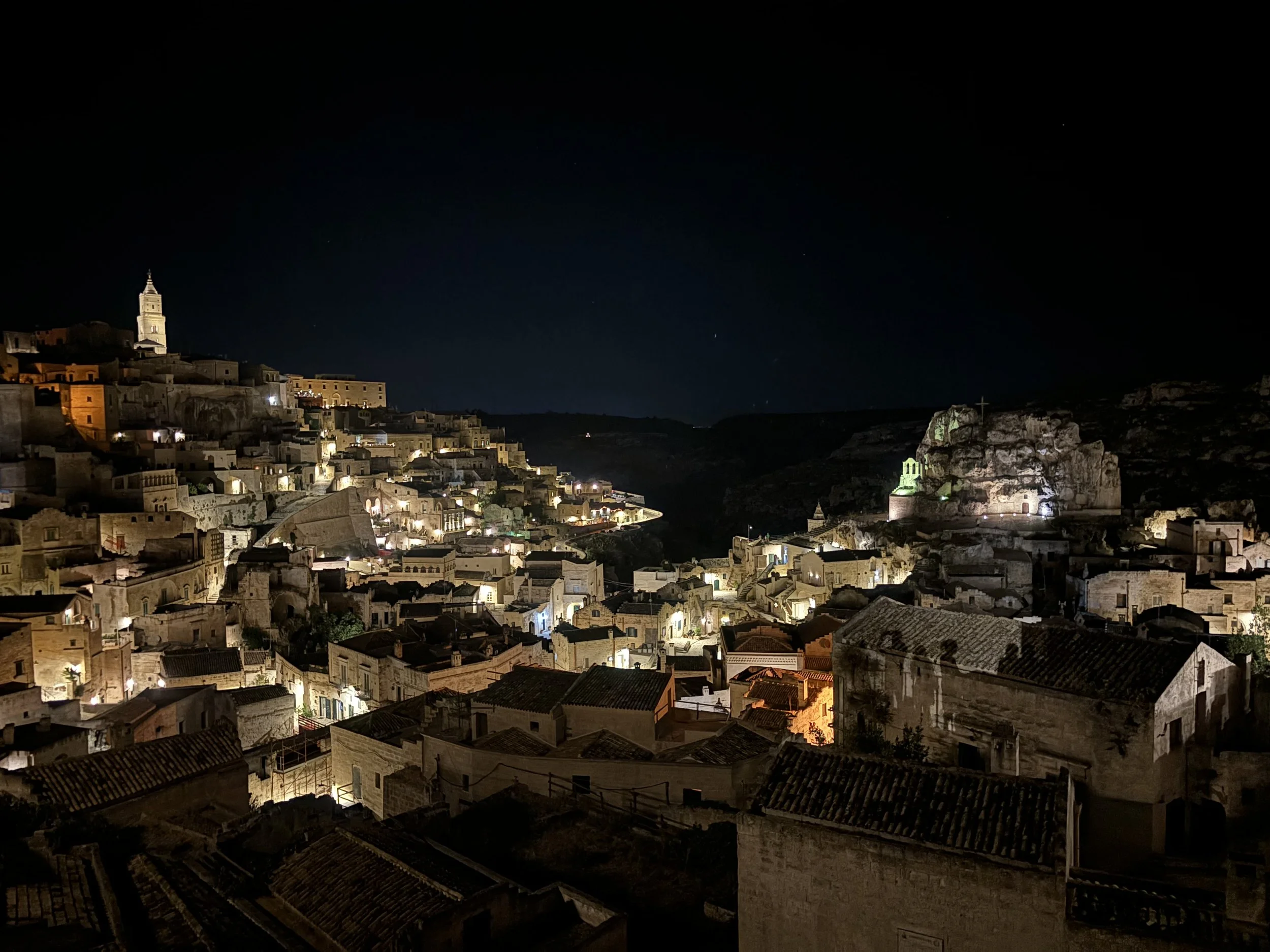
Murgia Materana Park which is on the other side of the canyon. You can reach the other side of the canyon either by hiking, which includes crossing the Ponte Tibetano della Gravina suspension bridge (this can be seen in the middle of the canyon picture below if you look closely), or, by car. From the park you can see a postcard view of the whole city of Matera across the canyon.
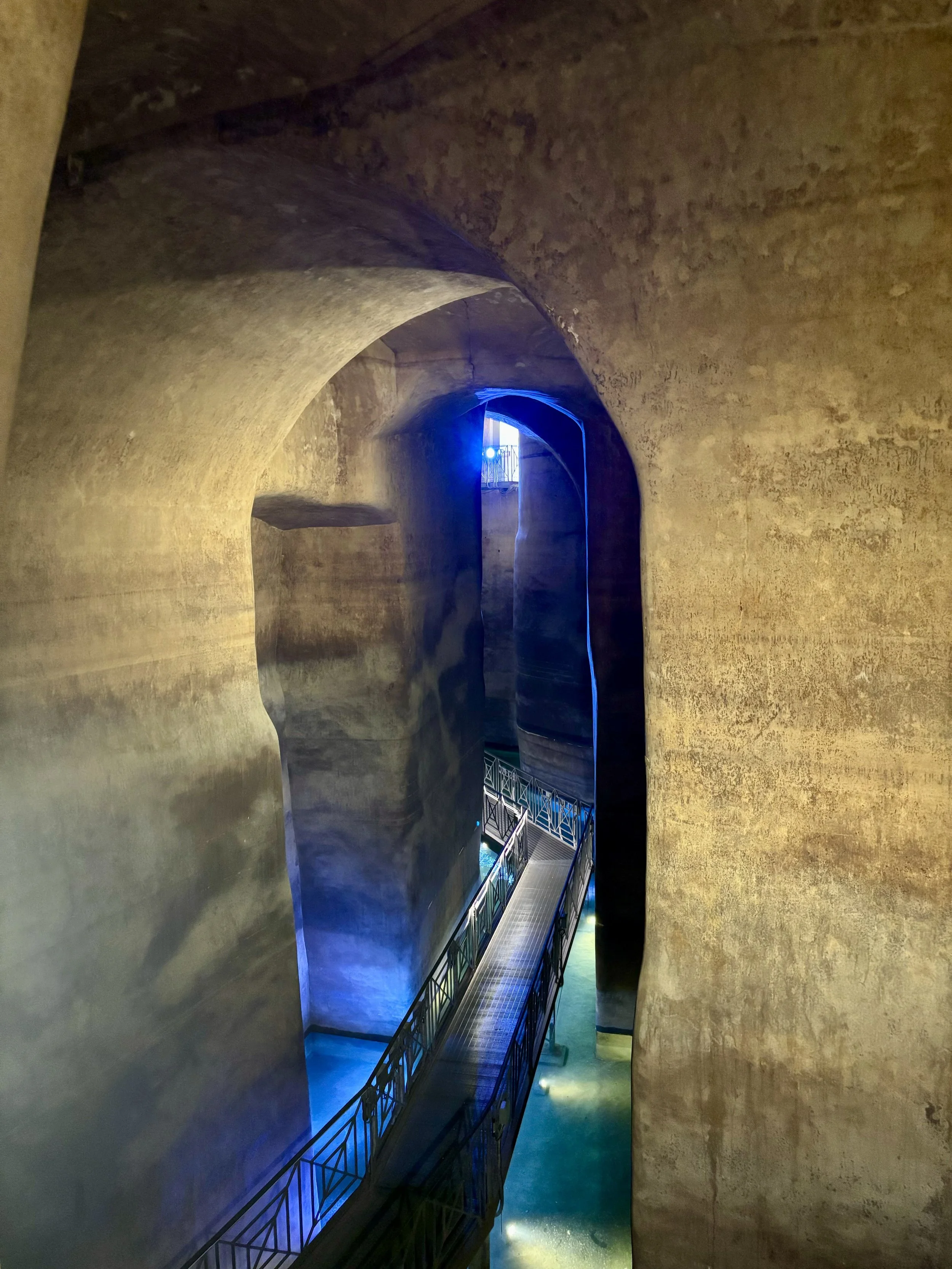
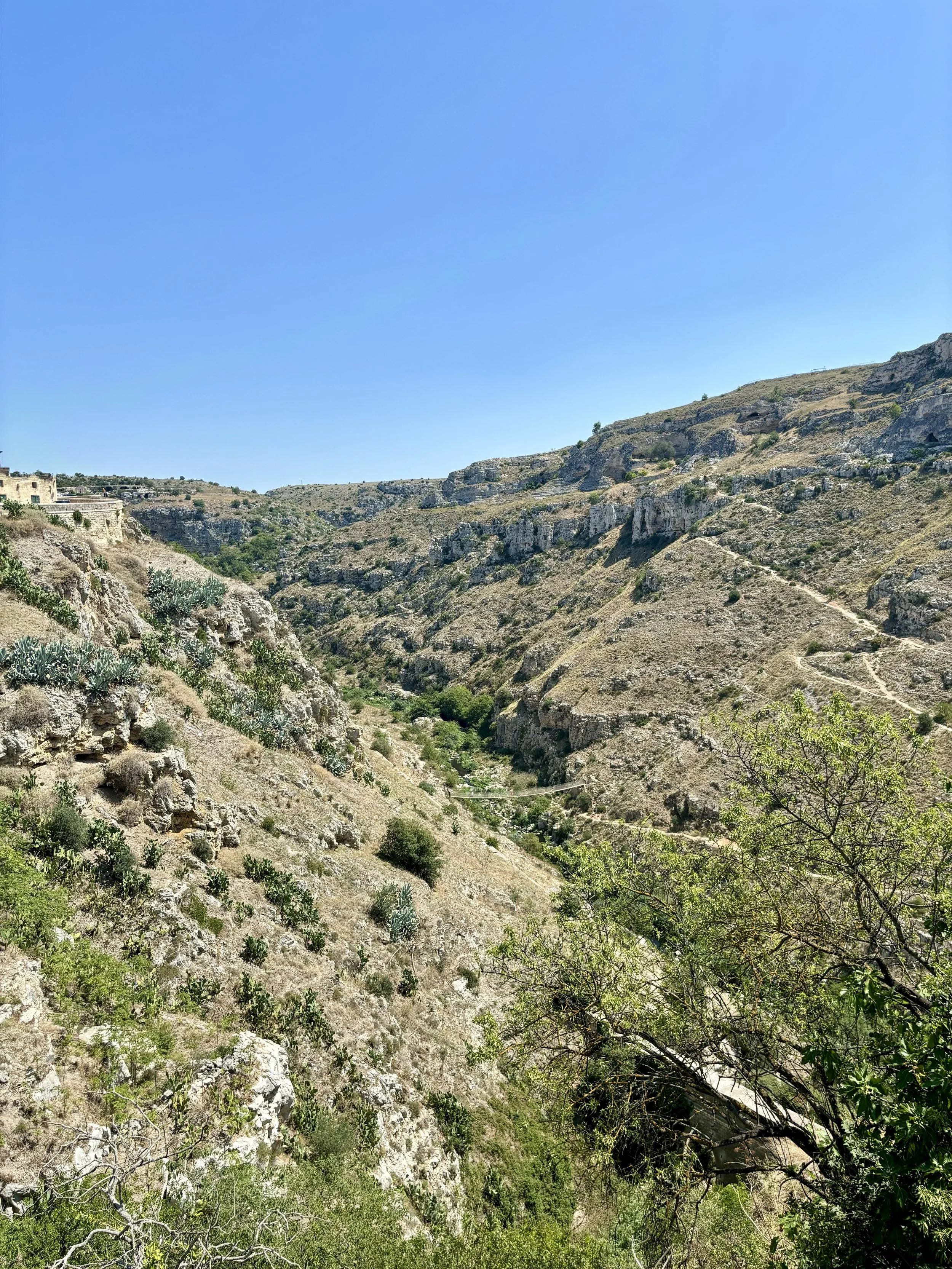
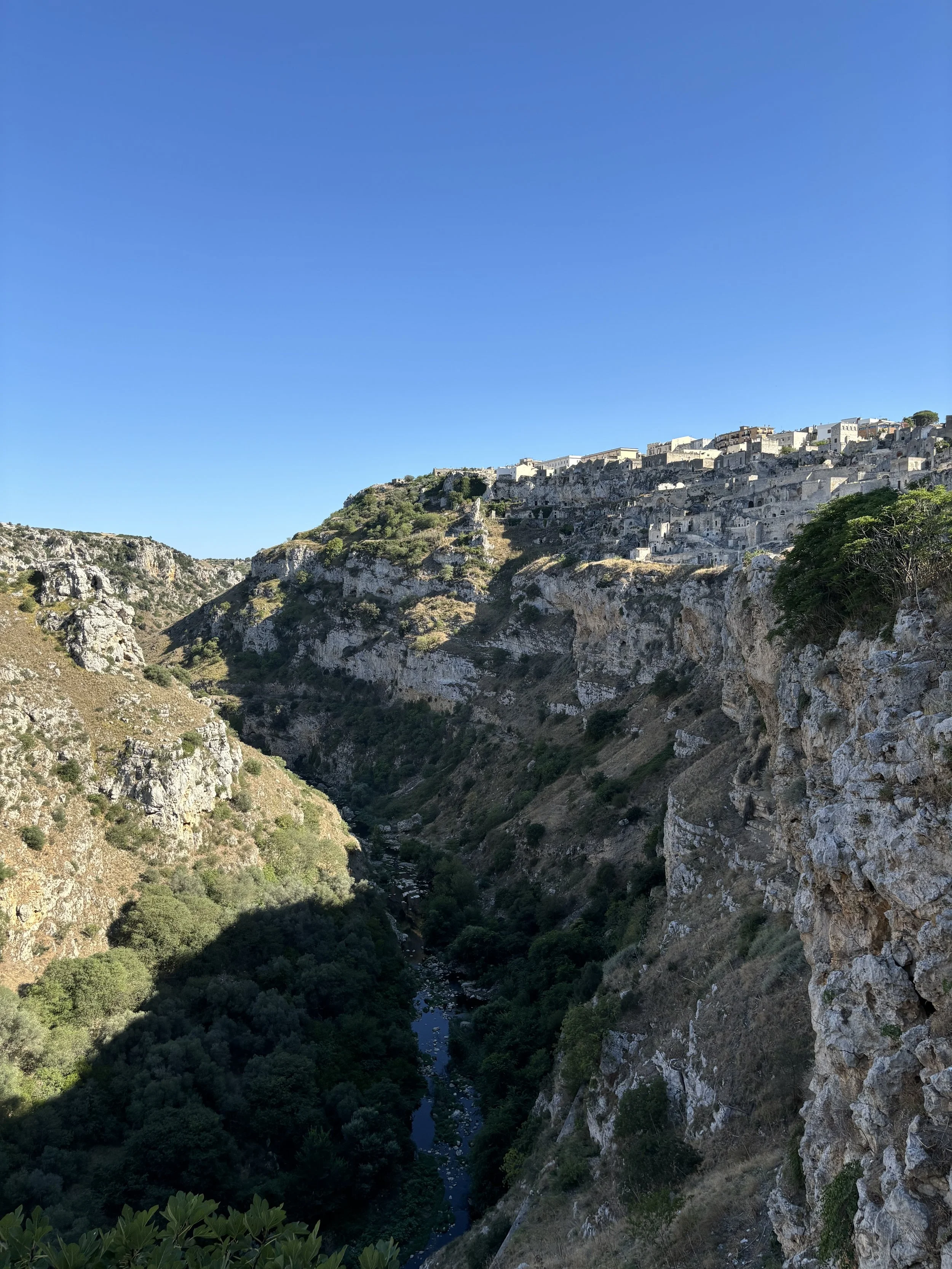
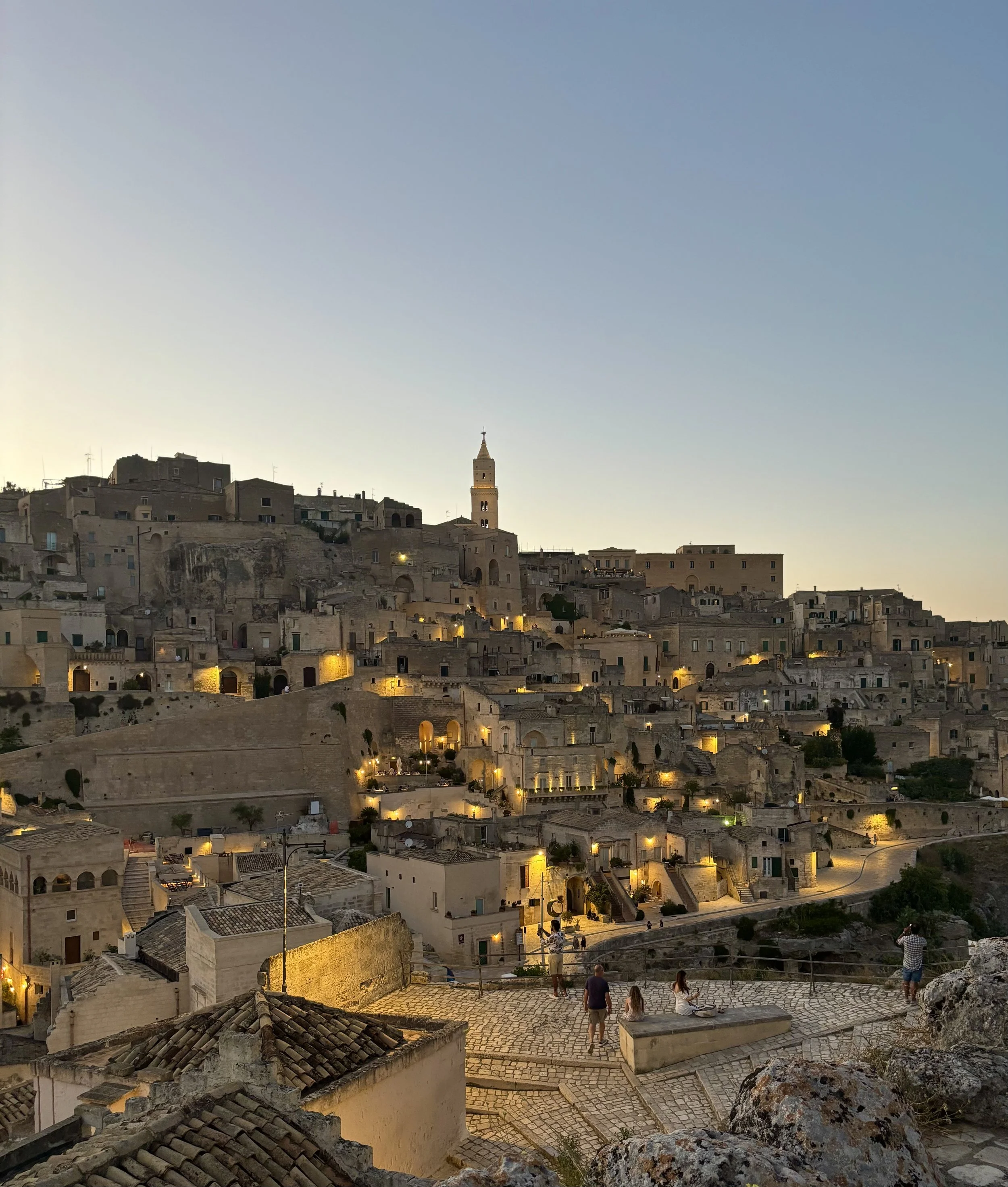
Last but by no means least, make sure to watch the sun settting over the Sassi as the caves turn a golden hue. This is enchanting whether watched from the Sassi itself, or, across the canyon in Murgia Materana Park.
Where to Stay in Matera?
I would highly recommend spending a night in Matera to fully immerse in the city and experience it both during the day, and, in the quiet of night when the Sassi is lit up by the soft glow of warm lights.
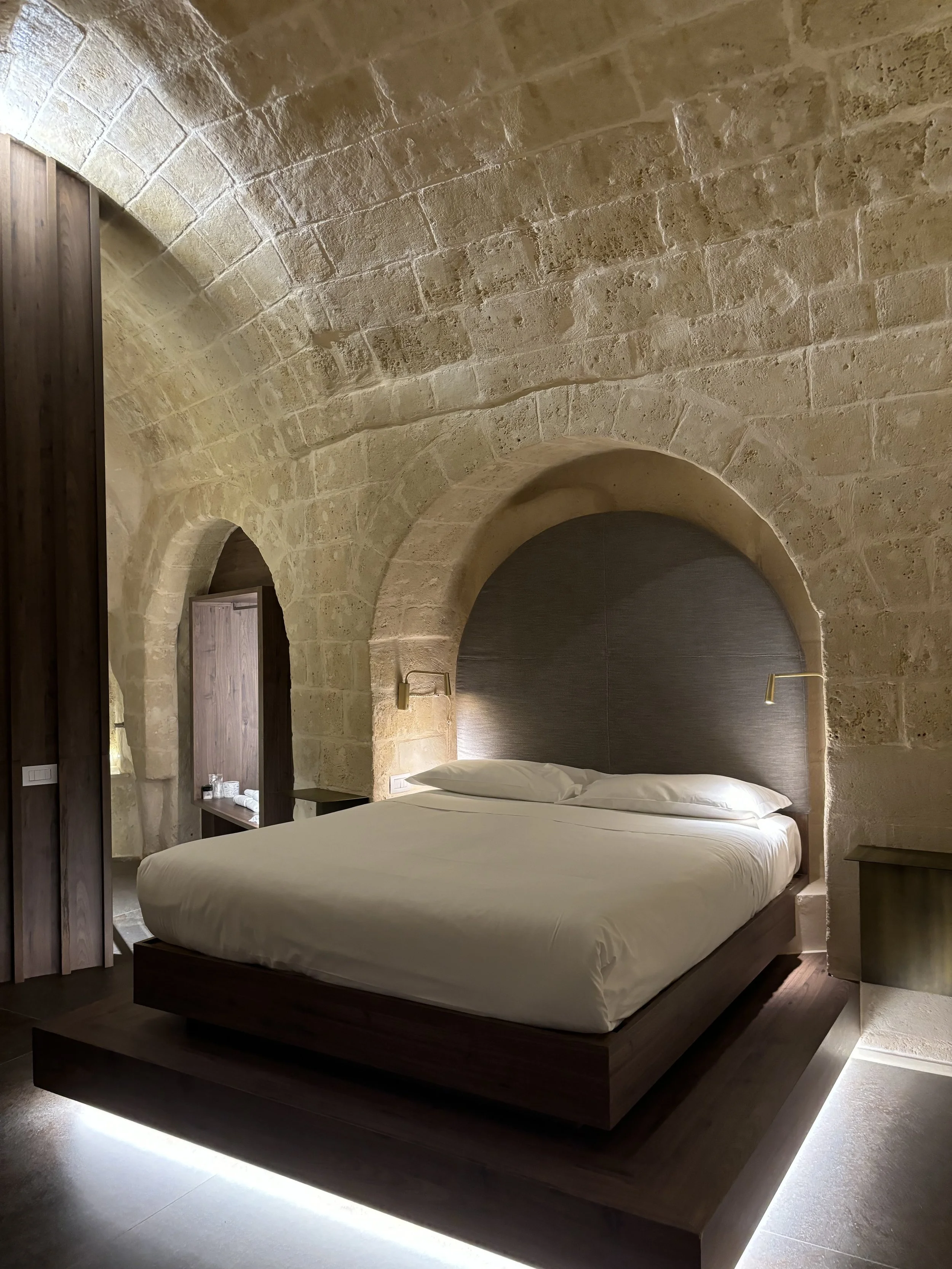
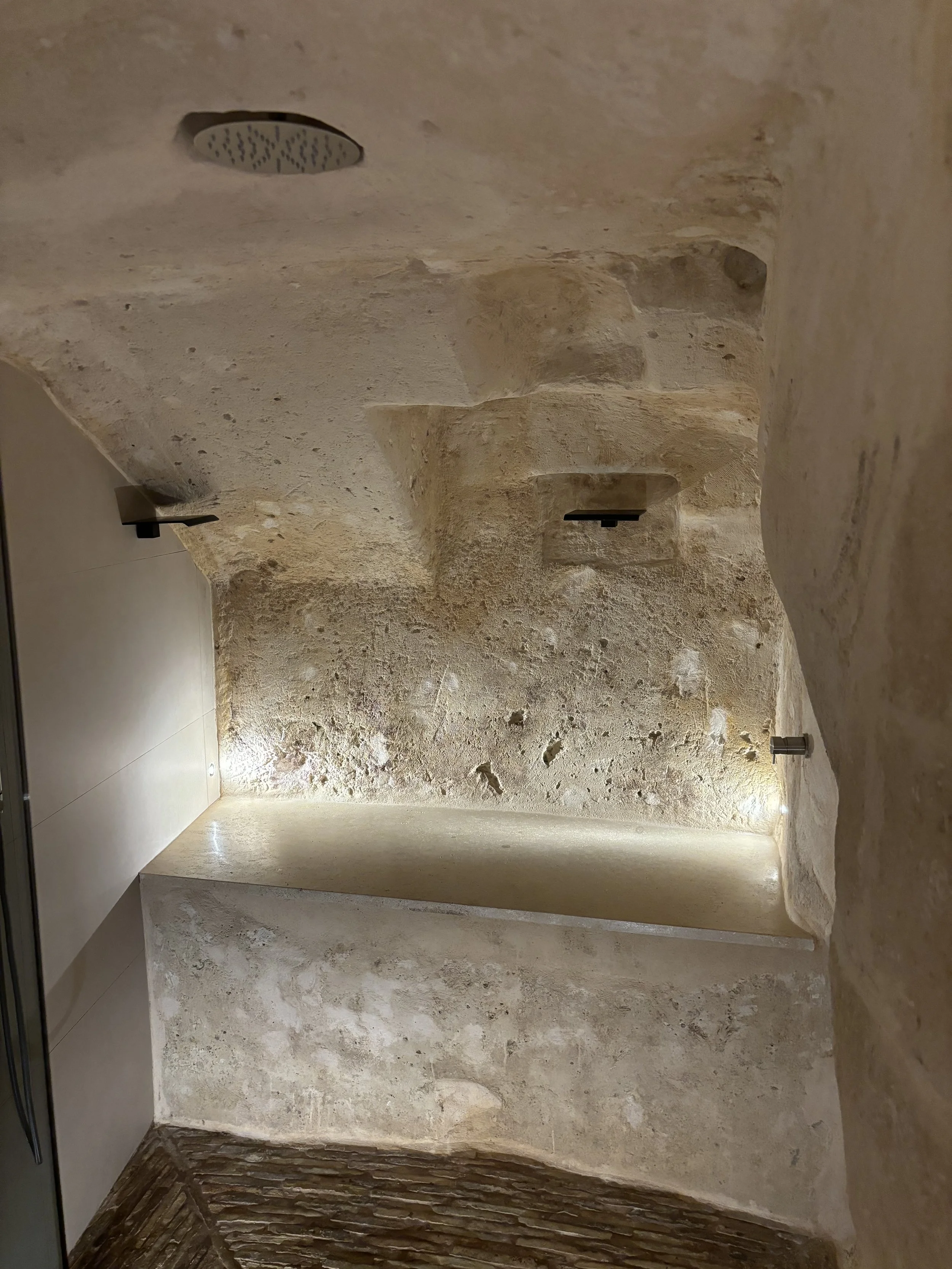
I stayed in a cave hotel, Le MalveCaveRetreat, with a room carved directly into the rock. It was an experience unlike anywhere else I’ve stayed. There’s something surreal about staying in a cave room that people have inhabited for centuries, with the cool stone walls and vaulted ceilings, but now fully equipped with modern amenities, including a fabulous waterfall shower. This hotel was the icing on the cake for a magical stay in Matera.
Practical Planning Tips For Visiting Matera:
The main airport serving the region is located in Bari which is in the Puglia region. There is a smaller airport in Brindisi, also in Puglia.
To get around Puglia and Basilicata you can rent a car, use private transfers, or, use the train and bus network. I have provided some detail on travelling around the area by train and bus below.
How to Travel Around Puglia and Basilicata Without a Car:
Puglia's public transport runs across a few different operators: FAL (Ferrovie Appulo Lucane) for Matera, Trenitalia for the coastal towns, FSE (Ferrovie del Sud Est) for Alberobello. It’s worth downloading the Trainline app or checking each operator's site directly, since not all routes show up on Google Maps.
Matera can be reached from Bari via. the FAL train, with a journey time of around 1 hour 45 minutes to 2.5 hours depending on the route and connections, or, the bus operated by ItaBus is quicker with a journey time of around 1 hour. Note that trains don't run on Sundays, so you'll need to take the bus instead which must be booked online in advance.
FlixBus also operates a bus service between Bari (both the city and airport) and Matera.